Beyond the Hype: 10 of the Best Places to Invest in Real Estate 2025
Discover the data-driven best places to invest in real estate 2025. Explore our top 10 U.S. markets for growth, cash flow, and long-term appreciation.
The real estate market in 2025 presents a unique landscape for investors. Shifting population trends, the persistence of remote work, and evolving economic drivers are creating new pockets of opportunity far from the traditional coastal hubs. While headlines may focus on national trends, savvy investors know that success lies in identifying specific, high-potential markets before they reach peak valuation. This guide moves beyond generic advice to provide a data-driven look at the best places to invest in real estate 2025, focusing on markets poised for sustainable growth and strong cash flow.
We analyzed hundreds of U.S. metros based on a strict methodology, evaluating key performance indicators to pinpoint areas with durable investment potential. Our criteria included:
- Robust Job Growth: Prioritizing metros with diverse and expanding employment sectors.
- Positive Population Trends: Identifying areas with strong net migration and demographic tailwinds.
- Housing Affordability & Value: Balancing entry costs with potential for appreciation and rental income.
- Favorable Cap Rates: Focusing on markets where rental yields outpace acquisition costs.
- Landlord-Friendly Regulations: Selecting states and cities with a clear and fair regulatory environment.
This comprehensive approach allowed us to curate a list of ten cities offering compelling investment theses for the year ahead. Whether you're seeking rapid appreciation in emerging tech hubs, steady monthly income from reliable rental markets, or a balanced portfolio that combines both, this roundup provides the critical metrics and actionable insights you need. We'll break down the specific investment case for each city, from Austin to Las Vegas, equipping you to make confident, data-backed decisions. This isn't just a list; it's a blueprint for finding opportunity and executing your investment strategy in 2025.
1. Austin, Texas Metro
Long known for its vibrant culture and live music scene, Austin has solidified its position as one of the best places to invest in real estate for 2025, driven by an unstoppable tech boom and explosive population growth. The "Silicon Hills" moniker is well-earned, with major employers like Tesla, Oracle, and Apple creating a constant influx of high-earning professionals seeking quality housing. This sustained demand, coupled with Texas's favorable no-state-income-tax policy, creates a powerful investment environment.
Investment Thesis & Key Metrics
Austin's strength lies in its relentless growth. The metro area boasts a robust 2.3% annual population increase and consistent job creation that outpaces national averages. While central Austin property values have soared, the rental market remains strong, with multi-family developments achieving cap rates between 6-7%. For cash-flow-focused investors, the real opportunity lies in the burgeoning suburbs.
- Median Home Price (Metro): ~$525,000
- Year-over-Year Rent Growth: +4.5%
- Key Industries: Technology, Advanced Manufacturing, Creative Media
Pro-Tip: The BRRRR (Buy, Rehab, Rent, Refinance, Repeat) strategy is particularly effective in transitioning neighborhoods like East Austin, where value-add opportunities can generate significant equity.
Actionable Investment Strategies
For optimal returns, look beyond the city core. Suburbs like Round Rock and Cedar Park offer a compelling blend of affordability and strong rental demand, often with better cap rates than downtown. These areas are magnets for families and professionals working at the numerous tech campuses dotting the North Austin corridor.
When analyzing properties, prioritize features that appeal to the tech demographic: dedicated home office space, high-speed internet readiness, and modern finishes. Enhancing a property's appeal can also yield significant returns; for instance, many investors are enhancing property value with outdoor kitchen installations in Austin, catering to the city's love for outdoor living. By understanding these demographic shifts and preferences, you can position your investment for maximum growth. Learn more about how population trends are shaping investment hotspots like Austin.
2. Phoenix, Arizona Metro
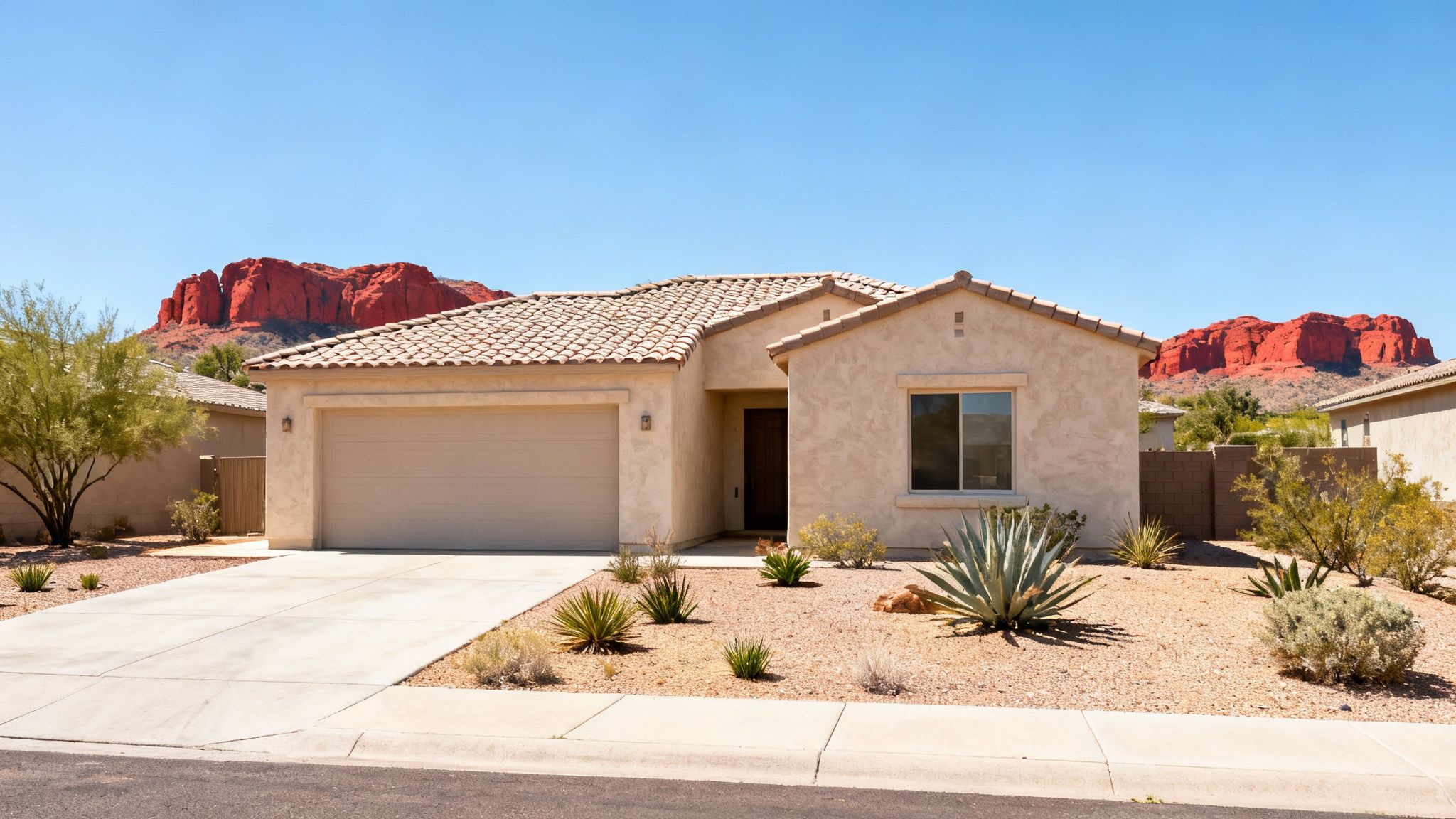
Phoenix has emerged as a powerhouse for real estate investment, fueled by a potent combination of affordability, consistent population inflow, and a diverse economic base. The Valley of the Sun draws a steady stream of retirees, young families, and remote workers attracted by its lower cost of living and business-friendly environment. This broad demographic appeal creates sustained rental demand across various property types and submarkets, making it one of the best places to invest in real estate for 2025.
Investment Thesis & Key Metrics
Phoenix’s investment thesis is built on high-volume growth and strong cash-flow potential. The metro area continues to expand, with abundant land allowing for new construction that helps moderate price acceleration compared to land-locked cities. Single-family rentals in suburbs like Chandler and Gilbert are achieving consistent cash-on-cash returns between 6-7%, while value-add opportunities near Arizona State University in Tempe benefit from perennial student and young professional demand.
- Median Home Price (Metro): ~$440,000
- Year-over-Year Rent Growth: +3.8%
- Key Industries: Aerospace & Defense, Healthcare, Semiconductor Manufacturing
Pro-Tip: Target retirement-oriented communities like Sun City or active adult enclaves for highly predictable, long-term tenancy. These tenants often maintain properties meticulously and provide stable rental income.
Actionable Investment Strategies
Focus on submarkets with distinct demand drivers. Gilbert and Chandler attract families with top-rated schools and corporate employers, making single-family rentals a prime strategy. In Tempe, multi-family properties or single-family homes that can be rented by the room offer strong returns due to proximity to ASU. For a more stable, lower-turnover strategy, look to the growing Queen Creek area, where new developments appeal to both families and retirees.
When evaluating properties, amenities like a pool or spa are significant value-adds that command higher rents, particularly for retirees and families. However, it's crucial to research the water sustainability of specific neighborhoods for long-term viability. A thorough real estate investment analysis can help you compare cap rates and cash-flow scenarios across these diverse Phoenix submarkets to pinpoint the most profitable opportunities.
3. Nashville, Tennessee Metro
No longer just a country music capital, Nashville has orchestrated a powerful transformation into a diversified economic hub, making it one of the best places to invest in real estate 2025. The city's cultural vibrancy, combined with a strong tourism sector and burgeoning healthcare and tech industries, creates a dynamic and resilient market. Tennessee's no-state-income-tax policy further amplifies its appeal, attracting both businesses and professionals seeking a high quality of life with lower financial burdens.

Investment Thesis & Key Metrics
Nashville's investment appeal is rooted in its economic diversification and population growth. The metro benefits from stable, high-paying jobs in healthcare giants like HCA Healthcare and Vanderbilt University Medical Center, insulating it from single-industry volatility. The booming tourism market also presents lucrative short-term rental (STR) opportunities. Astute investors can find single-family rentals in gentrifying neighborhoods like East Nashville delivering solid returns. Exploring the relationship between net operating income and property value is key; understanding what is cap rate in real estate will clarify Nashville's potential.
- Median Home Price (Metro): ~$480,000
- Year-over-Year Rent Growth: +5.2%
- Key Industries: Healthcare, Entertainment/Tourism, Technology
Pro-Tip: Target value-add properties near major healthcare institutions. These areas offer a consistent tenant pool of medical professionals and staff, reducing vacancy risk and ensuring steady demand for well-maintained rental units.
Actionable Investment Strategies
A hybrid strategy can maximize returns in Nashville. Focus on long-term single-family or multi-family rentals in residential areas like East Nashville or emerging neighborhoods like Jefferson Hill for stable cash flow and appreciation. Simultaneously, analyze the STR market in tourist-heavy zones like The Gulch or 12 South. These areas can generate significant income, particularly during peak tourist season, but require careful management and an understanding of local regulations.
For a BRRRR strategy, look for properties in transitioning neighborhoods that are poised for growth. Prioritize properties with potential for adding bedrooms or modernizing kitchens and baths to force appreciation. Given the diverse tenant base, offering flexible lease terms or furnished units near medical centers can command premium rents and attract high-quality, long-term tenants.
4. Raleigh-Durham, North Carolina Metro
The Research Triangle Park (RTP) region, encompassing Raleigh, Durham, and Chapel Hill, continues its ascent as a premier destination for real estate investment in 2025. This area’s unique strength stems from a powerful combination of world-class universities, a booming life sciences and tech sector, and relative affordability compared to other major tech hubs. The constant pipeline of talent from Duke University, UNC-Chapel Hill, and NC State University fuels a dynamic economy and ensures consistent, high-quality rental demand from both students and a growing professional class.
Investment Thesis & Key Metrics
Raleigh-Durham's investment appeal is rooted in its stable, education-driven economy and impressive growth trajectory. The region consistently ranks among the nation's leaders for job creation and in-migration, attracting skilled workers to employers like Apple, Google, and numerous biotech firms. This influx supports both strong rental yields and property appreciation, making it a well-balanced market for diverse investment strategies.
- Median Home Price (Metro): ~$430,000
- Year-over-Year Rent Growth: +5.2%
- Key Industries: Life Sciences, Technology, Higher Education, Healthcare
Pro-Tip: Multi-unit properties near the major university campuses offer a significant advantage. They allow for economies of scale in management and can generate robust cash flow, with student housing near Duke and UNC often achieving returns between 7-8%.
Actionable Investment Strategies
Investors can find success by targeting two distinct renter pools. Single-family rentals in suburbs like Cary and Apex attract high-earning professionals and families seeking top-rated schools, while multi-family properties or single-family homes near the universities cater to the perennial student population. For instance, single-family rentals near NC State in Raleigh are generating reliable cap rates in the 6.5-7.5% range.
When evaluating opportunities, focus on properties that serve the needs of these key demographics. For professionals, look for homes with office space and proximity to RTP. For students, prioritize walkability to campus and amenities that support shared living. Utilizing detailed neighborhood analysis tools can help identify specific pockets with the highest cap rates, ensuring your investment is positioned for optimal performance in one of the best places to invest in real estate.
5. Fort Worth, Texas Metro
Often seen as the more approachable sibling in the Dallas-Fort Worth metroplex, Fort Worth has carved out its own identity as a premier real estate investment destination for 2025. Evolving from its industrial roots, the city now boasts a vibrant cultural scene, strong job growth, and an affordable cost of living that attracts residents and businesses alike. As investors look for growth trajectories similar to Austin but with a lower barrier to entry, Fort Worth presents a compelling, value-driven alternative.
Investment Thesis & Key Metrics
Fort Worth's investment appeal is rooted in its potent mix of affordability and economic expansion. Major corporate employers like American Airlines and Lockheed Martin provide a stable employment base, while ongoing revitalization projects fuel long-term appreciation. The city offers a balanced market where both cash flow and equity growth are achievable. Single-family rentals in popular areas like the Near Southside are delivering strong cap rates, often in the 6.5-7.5% range.
- Median Home Price (Metro): ~$360,000
- Year-over-Year Rent Growth: +4.2%
- Key Industries: Aerospace & Defense, Logistics, Healthcare
Pro-Tip: Focus on emerging neighborhoods undergoing revitalization, such as the historic Stockyards District. These areas offer significant appreciation potential as they attract new businesses, restaurants, and residents drawn to their unique cultural character.
Actionable Investment Strategies
Investors can find success by targeting single-family homes or small multi-family properties that appeal to young professionals and families relocating from more expensive states like California and New York. Prioritize properties near Fort Worth's growing downtown cultural district and major employment hubs to minimize vacancy risk. For those pursuing a value-add approach, BRRRR investors are finding excellent opportunities in transitional neighborhoods where strategic renovations can unlock substantial equity.
When analyzing deals, consider proximity to key infrastructure and lifestyle amenities. Properties near the Trinity Railway Express (TRE) line offer an easy commute to Dallas, expanding the potential tenant pool. By using platforms like Property Scout 360 to identify neighborhoods with the best combination of cap rates and appreciation forecasts, you can make a data-driven decision and position your investment for success in one of 2025's most promising markets.
6. Tampa Bay, Florida Metro
Combining affordable coastal living with a rapidly diversifying economy, Tampa Bay has emerged as a premier destination for real estate investors in 2025. The region's appeal is multi-faceted, attracting retirees with its sunshine, young professionals with its growing tech and finance sectors, and remote workers seeking a better quality of life. Florida's no-state-income-tax policy further amplifies its attractiveness, fueling consistent population inflow and housing demand.
Investment Thesis & Key Metrics
Tampa Bay's investment strength is rooted in its steady growth and diverse rental markets. The metro area is experiencing a significant influx of new residents, drawn by both lifestyle and job opportunities, which keeps both rental and sales markets hot. From stable, long-term rentals in retirement communities to high-yield short-term vacation properties, the region offers a variety of investment avenues.
- Median Home Price (Metro): ~$415,000
- Year-over-Year Rent Growth: +3.8%
- Key Industries: Financial Services, Healthcare, Technology, Tourism
Pro-Tip: A hybrid rental strategy works exceptionally well here. Focus on long-term rentals in residential hubs like St. Petersburg for stable cash flow, while operating short-term rentals in tourist-heavy areas like Clearwater Beach to maximize seasonal income.
Actionable Investment Strategies
Investors can find success by targeting specific demographics. Properties near the University of South Florida (USF) offer a reliable stream of student tenants, often yielding returns of 6-7%. In emerging neighborhoods like Ybor City, value-add opportunities on historic properties present significant appreciation potential. For more stable, long-term tenants, consider age-restricted communities, where yields for well-maintained single-family homes can average 5.5-6.5%.
A critical factor in Tampa is property insurance. When analyzing deals, meticulously account for higher premiums in flood and hurricane-prone zones. Prioritize properties with updated roofs, impact windows, and higher elevations to mitigate both risk and cost. Modeling these expenses accurately is key to ensuring your investment remains profitable.
7. Charlotte, North Carolina Metro
Long recognized as the Southeast's financial powerhouse, Charlotte has diversified into a major economic hub, making it one of the best places to invest in real estate for 2025. Its blend of affordability, robust corporate presence, and consistent population growth creates a stable yet high-potential market. Major corporations like Bank of America, Wells Fargo, and Duke Energy anchor the economy, drawing a steady stream of young professionals and families seeking a high quality of life with a lower cost of living than many coastal metros.
Investment Thesis & Key Metrics
Charlotte's investment appeal is rooted in its balance of cash flow and appreciation. The metro area maintains an impressive 1.8% annual population growth, fueled by strong job creation in finance, healthcare, and technology. While home prices have risen, they remain accessible compared to other top-tier cities, allowing for stronger initial returns. The rental market is vibrant, with single-family rentals in desirable suburbs achieving cap rates between 6-6.5%.
- Median Home Price (Metro): ~$410,000
- Year-over-Year Rent Growth: +4.1%
- Key Industries: Financial Services, Healthcare, Energy, Technology
Pro-Tip: Focus on properties with strong tenant appeal, such as those near major employment centers or with easy access to the LYNX Blue Line light rail. This infrastructure is a key driver of value in neighborhoods like South End and NoDa (North Davidson).
Actionable Investment Strategies
Investors can find success by targeting specific demographics. For young professionals, condos and townhomes in Uptown and South End offer strong rental demand and appreciation potential. For families, look to thriving suburbs like Ballantyne, Waxhaw, or Huntersville, which provide excellent schools and community amenities, driving demand for single-family rentals.
When evaluating deals, prioritize proximity to major highways like I-77 and I-485, as accessibility is crucial for tenants. Value-add projects in emerging neighborhoods also present significant opportunities for forced appreciation. Before committing, use data tools to model potential Charlotte returns and compare them against other growth markets. You can analyze population shifts and economic indicators shaping hotspots like Charlotte to validate your investment strategy.
8. Boise, Idaho Metro
Once considered a hidden gem, Boise has emerged as a powerhouse for real estate investment, drawing significant attention for its remarkable quality of life, business-friendly environment, and strong population inflow. The metro is a prime beneficiary of the "Zoom Boom," attracting a steady stream of remote workers and tech professionals from high-cost states like California. This migration, combined with a burgeoning local tech scene and low entry prices, makes Boise one of the best places to invest in real estate in 2025 for those seeking both appreciation and cash flow.
Investment Thesis & Key Metrics
Boise's investment appeal is rooted in its potent combination of affordability and rapid growth. The market offers attractive cap rates, particularly for single-family rentals, which are in high demand from relocating professionals. With a diverse economy spanning technology, healthcare, and advanced manufacturing, the city's job market is resilient and expanding, fueling consistent demand for rental housing and driving property values upward.
- Median Home Price (Metro): ~$480,000
- Year-over-Year Rent Growth: +5.2%
- Key Industries: Technology, Healthcare, Agribusiness, Advanced Manufacturing
Pro-Tip: Focus on neighborhoods with strong lifestyle appeal. Properties offering proximity to the Boise River Greenbelt, hiking trails, or downtown's vibrant social scene command premium rents and attract high-quality tenants.
Actionable Investment Strategies
Investors can find success by targeting single-family homes in emerging neighborhoods like West Boise and Meridian. These areas provide a lower cost basis than the more established North End while still benefiting from the metro's overall growth trajectory. Properties with dedicated home office space and modern amenities are particularly sought-after by the influx of out-of-state professionals.
Multi-family properties near Boise State University or the downtown core also present a solid opportunity, with yields often reaching between 5.5% and 6.5%. The key is to analyze the specific renter profile, which increasingly consists of younger, high-earning professionals rather than just students or traditional families. By tracking Boise's tech sector growth and demographic shifts, you can identify submarkets poised for the most significant appreciation.
9. Memphis, Tennessee Metro
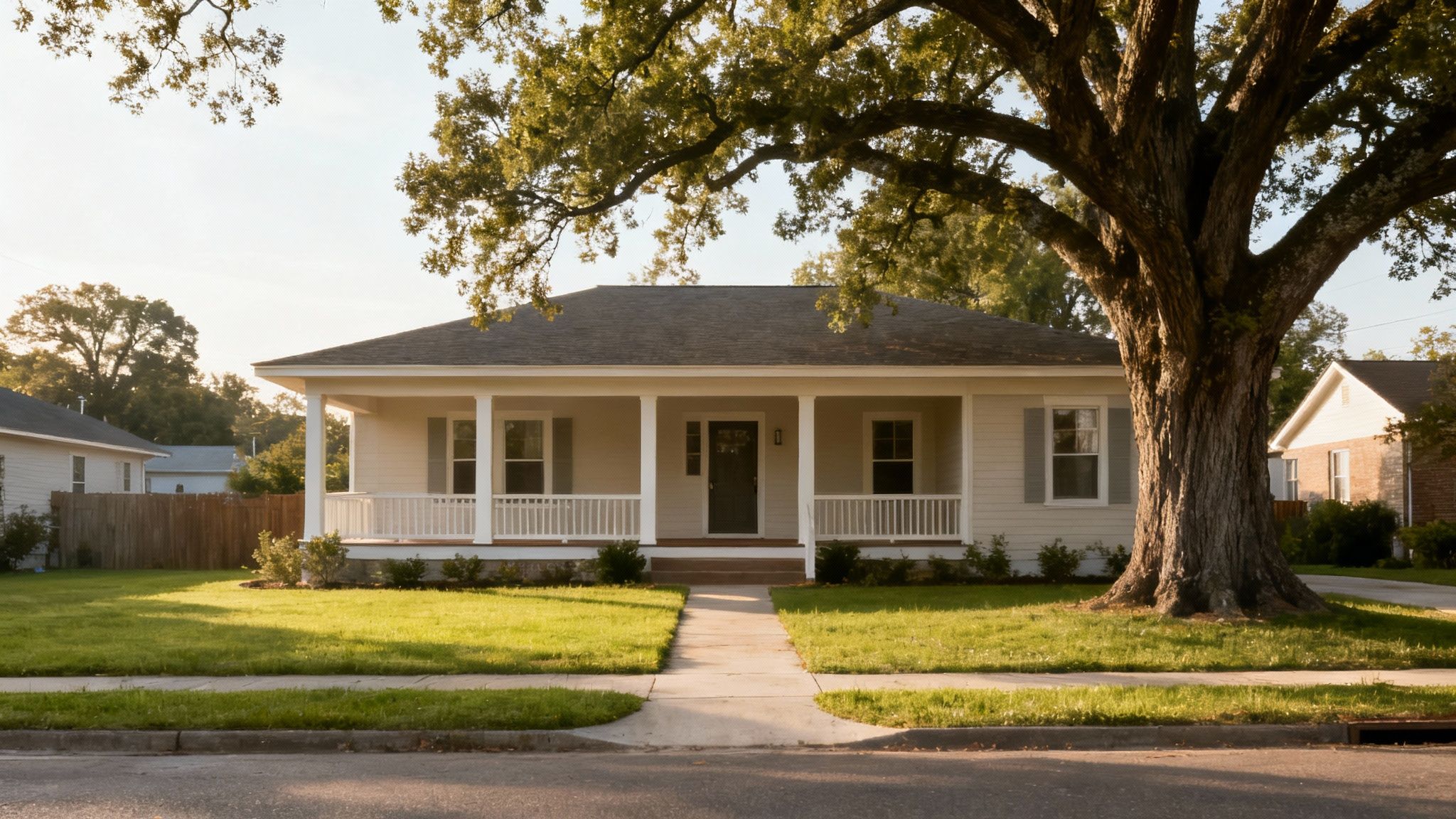
Memphis stands out as a top contender for the best places to invest in real estate 2025 by offering a rare and powerful combination: exceptional affordability and some of the highest cash-flow potential among major U.S. markets. This market is a haven for investors prioritizing consistent rental income over speculative appreciation. Its foundation is built on a massive logistics and distribution sector, anchored by giants like FedEx, which ensures a steady base of employment and tenant demand.
Investment Thesis & Key Metrics
The investment thesis for Memphis is simple: strong, predictable cash flow. With remarkably low entry costs, investors can acquire properties that generate significant rental income relative to their purchase price. This dynamic creates high cap rates and impressive cash-on-cash returns, making it a prime market for buy-and-hold strategies. The limited competition from large institutional investors also provides more opportunities for individual buyers.
- Median Home Price (Metro): ~$210,000
- Average Cap Rate (Single-Family): 8-9%
- Key Industries: Logistics & Distribution, Healthcare, Manufacturing
Pro-Tip: Neighborhood selection is critical in Memphis. Focus due diligence on areas with stable tenant pools and low vacancy rates near major employment hubs like the FedEx World Hub, the medical district, or the University of Memphis to mitigate risk and maximize returns.
Actionable Investment Strategies
The BRRRR (Buy, Rehab, Rent, Refinance, Repeat) strategy thrives in Memphis due to the abundance of older housing stock that can be purchased well below market value. A cosmetic renovation can significantly boost a property's rental income and appraised value. For example, purchasing a single-family home for $130,000, investing $25,000 in updates, and then renting it for $1,600 per month is a common and achievable scenario.
When searching for properties, target stable, working-class neighborhoods where tenant demand is consistent. Focusing on multi-family units near logistics centers can also secure long-term corporate tenants. By leveraging the low cost of entry and high rental yields, you can build a robust, cash-flowing portfolio. Get ahead by learning how to find undervalued properties before they hit the market to gain a competitive edge.
10. Las Vegas, Nevada Metro
Beyond the glitz of the Strip, Las Vegas has emerged as a powerhouse for real estate investment in 2025, offering a unique combination of explosive growth, affordability, and a favorable tax climate. Nevada's no-state-income-tax policy acts as a powerful magnet, drawing in a steady stream of remote workers, retirees, and businesses from high-tax states like California. This migration fuels both strong population growth and a dynamic, dual-opportunity rental market.
Investment Thesis & Key Metrics
Las Vegas’s investment appeal is multifaceted, catering to both traditional long-term rentals and high-yield short-term vacation rentals with less stringent regulations than other tourist hubs. The city’s economic diversification into professional sports, technology, and healthcare has created a more stable job market, underpinning consistent housing demand. This environment makes it one of the best places to invest in real estate for cash flow and appreciation.
- Median Home Price (Metro): ~$410,000
- Year-over-Year Population Growth: +2.1%
- Key Industries: Hospitality & Tourism, Logistics, Technology, Healthcare
Pro-Tip: Leverage a hybrid strategy. Secure stable cash flow with long-term rentals in master-planned communities like Henderson or Summerlin, while capitalizing on peak-season demand with a short-term rental property located just off the main tourist corridor.
Actionable Investment Strategies
Investors can find success by targeting two distinct renter profiles. In suburban areas, focus on properties that appeal to remote workers and families by offering amenities like a dedicated home office, reliable high-speed internet, and access to good schools. These long-term rentals in neighborhoods like Henderson often yield reliable cap rates between 6-7%.
For a higher-risk, higher-reward approach, explore the short-term rental (STR) market. Properties near the Las Vegas Boulevard periphery or the Convention Center can generate significant monthly income, particularly during major events and peak tourist seasons. However, it's crucial to thoroughly research local HOA regulations and analyze seasonal occupancy fluctuations to accurately project returns.
Top 10 Real Estate Investment Markets 2025 Comparison
| Market | 🔄 Implementation Complexity | ⚡ Resource Requirements | 📊 Expected Outcomes | 💡 Ideal Use Cases | ⭐ Key Advantages |
|---|---|---|---|---|---|
| Austin, TX Metro | High — competitive bidding, limited supply | High capital ($550k median); active management | 5–7% cap; 7–9% annual appreciation; strong rental demand | Long-term appreciation plays; tech-worker SFRs; BRRRR in suburbs | Strong population growth; no state income tax; diversified tech economy |
| Phoenix, AZ Metro | Medium — development-friendly but resource risks (water/heat) | Medium capital ($450k median); moderate management | 6–8% cap; 95%+ occupancy; steady cash flow | Retirement communities; value-add near universities; suburban SFRs | Lower entry prices; high occupancy; higher cap rates |
| Nashville, TN Metro | Medium — STR seasonality and tourist regulation risk | Medium–High capital ($520k median); mix of STR/LTR management | 5.5–7% cap; 6–8% appreciation; dual rental potential | Hybrid STR + long-term; healthcare-worker rentals; BRRRR | No state income tax; tourism + healthcare + growing tech |
| Raleigh‑Durham, NC Metro | Medium — student cycles and neighborhood segmentation | Medium capital ($420k median); portfolio scale benefits for multi-units | 6–8% cap; stable demand from students/professionals; tech-driven growth | Student housing; tech-worker rentals; multi-unit value-add | Affordable entry; strong universities and tech stability |
| Fort Worth, TX Metro | Low–Medium — less competition, emerging revit. areas | Low–Medium capital ($380k median); family-oriented property demand | 6–8% cap; 5–7% appreciation | Emerging neighborhood flips; suburban family rentals; BRRRR | Lowest major-TX entry price; high cap potential; diverse jobs |
| Tampa Bay, FL Metro | Medium — insurance/hurricane considerations; seasonal demand | Medium capital ($440k median); insurance and STR management costs | 5.5–7% cap; seasonal occupancy; beach premium pricing | STRs near beaches; retirement communities; hybrid long/short-term | No state income tax; beachfront premiums; tourism + growing tech |
| Charlotte, NC Metro | Low–Medium — stable but sector-concentrated market | Medium capital ($400k median); commuter/suburban focus | 6–7.5% cap; 5–7% appreciation | Uptown young-professional rentals; suburban family SFRs; value-add | Financial hub; affordable compared to peers; diversified employers |
| Boise, ID Metro | Medium — rapid growth but smaller market infrastructure | Medium capital ($380k median); emerging-lender considerations | 6–7.5% cap; high appreciation potential; 2.4% pop growth | Tech-worker rentals; BRRRR; lifestyle/remote-worker properties | Highest population growth on list; lower prices; emerging tech scene |
| Memphis, TN Metro | Low — high cash-flow opportunities but neighborhood risk | Low capital ($250k median); intensive asset-level due diligence | 8–10% cap; 3–5% appreciation; strongest cash flow | Cash‑flow-focused portfolios; BRRRR; value‑add renovations | Lowest entry price; highest cap rates; low institutional competition |
| Las Vegas, NV Metro | Medium — seasonal tourism volatility; STR concentration | Medium capital ($420k median); STR management focus | 5.5–7% cap; moderate appreciation; dual rental market | STRs near Strip; suburban long-term rentals; hybrid strategies | No state income/capital‑gains tax; STR‑friendly rules; tourism demand |
From Analysis to Action: Your Next Steps to Invest in 2025
Navigating the dynamic landscape of real estate investing requires more than just knowing where to look; it demands a strategic, data-driven approach to how you invest. We've explored ten of the most promising markets for 2025, from the tech-fueled growth of Austin and Raleigh-Durham to the steady, cash-flow potential of Memphis. Each city presents a unique investment thesis built on a foundation of strong job growth, increasing population, and resilient rental demand.
The common thread connecting these diverse markets is the undeniable shift towards data-centric decision-making. The days of relying on gut feelings or broad market generalizations are over. Success in 2025 hinges on your ability to move from high-level market analysis to granular, property-specific due diligence. The methodology we outlined, focusing on key metrics like cap rates, rent growth, and economic diversification, provides a repeatable framework you can apply not only to these top ten cities but to any market you consider.
Key Takeaways for Your 2025 Investment Strategy
Recapping our journey, several core principles stand out as critical for any investor looking to capitalize on the best places to invest in real estate 2025:
- Follow the Jobs: Economic and population growth are the primary drivers of real estate appreciation and rental demand. Markets like Phoenix, Nashville, and Fort Worth demonstrate a direct correlation between corporate relocations, job creation, and housing market strength.
- Diversification is Your Shield: Look for markets with a diverse economic base. Cities that are not reliant on a single industry are better insulated against sector-specific downturns, offering more stable, long-term returns.
- Affordability Drives Demand: Even in high-growth areas, relative affordability can unlock significant potential. Markets like Tampa and Charlotte attract new residents and businesses partly because they offer a better quality of life at a lower cost than major coastal hubs.
- Legislation Matters: Local and state-level policies, from landlord-tenant laws to property tax rates, can profoundly impact your bottom-line profitability. Always factor in the regulatory environment as part of your initial market screening.
Turning Market Insights into Actionable Investments
Identifying a promising market is the first step on a much longer journey. The real work begins when you transition from analyzing city-level data to evaluating a specific property. This is where your investment thesis meets reality. To bridge this gap effectively, you must develop a rigorous, standardized due diligence process.
Here is a practical checklist to guide your next steps as you zero in on a potential investment:
- Validate Your Assumptions: Use real-time data to verify the rental comps, property taxes, and estimated operating expenses for your target property. Do not rely solely on the seller's pro forma or outdated Zillow estimates.
- Conduct Hyper-Local Analysis: Drill down to the neighborhood and even the block level. Assess local school ratings, crime rates, proximity to amenities like parks and grocery stores, and any planned infrastructure projects. These micro-factors significantly influence tenant demand and long-term appreciation.
- Build Your Local Team: Before making an offer, establish connections with a reliable local real estate agent, property manager, and contractor. Their on-the-ground expertise is invaluable for validating your numbers and navigating local market nuances.
- Secure Your Safeguards: As you move toward closing, protecting your asset becomes paramount. A critical part of this is understanding your homeowners insurance policy and ensuring you have adequate coverage for liabilities, property damage, and potential loss of rental income. This isn't just a formality; it's a fundamental component of your risk management strategy.
By systematically executing these steps, you transform a promising market opportunity into a tangible, profitable asset. This disciplined approach ensures you are not just buying a property but making a calculated investment poised for success in 2025 and beyond.
Ready to move from market research to deal analysis with confidence? Stop juggling messy spreadsheets and start making data-driven decisions with Property Scout 360. Our platform provides the real-time data, financial modeling, and property-level insights you need to confidently evaluate investments in any of the top markets for 2025. Try Property Scout 360 today and turn your investment strategy into action.
About the Author
Related Articles
2026 Investor's Guide: Cost of Installing a Sewer Clean Out
Understand the cost of installing a sewer clean out for investment properties in 2026. Get expert advice on prices, ROI, & budgeting for flips. Plan smart!
15 Year vs 30 Year Mortgage: The Investor's Choice
Deciding between a 15 year vs 30 year mortgage for a rental property? Our guide analyzes cash flow, ROI, and equity to help you pick the best loan.
Real Estate Appraisal Software: Features & Limits
Discover what real estate appraisal software is, its core features, and limits. See how it differs from investment tools for profitable deals.
