How to Buy a Duplex Property A Modern Investor's Guide
Discover how to buy a duplex property with our guide for modern investors. We cover financing, deal analysis, and landlord strategies that actually work.
If you're looking to dip your toes into real estate investing, buying a duplex is one of the smartest moves you can make. It's the perfect entry point, especially when you use a strategy called house hacking—living in one unit and renting out the other. Think of it this way: your tenant is essentially helping you pay down your mortgage.
This single move combines the stability of homeownership with the wealth-building power of rental income. It’s a game-changer for first-time investors.
Why a Duplex Is Your Smartest First Investment Move

Let's bust a common myth right now: you don't need a massive pile of cash to get started in real estate. A duplex is the perfect bridge between just owning a home and becoming a full-fledged investor. It's one property, one purchase, but it gives you two distinct assets.
The real magic here is in the "house hacking" approach. When you live in one of the units, you’re considered an owner-occupant, which completely changes the financing game and opens up loan options that most investors can only dream of. This one detail makes getting started so much easier.
Unlocking Powerful Financial Advantages
The down payment is often the biggest wall new investors run into. But with a duplex, you can often get around the typical 20-25% down payments that standard investment properties demand. Instead, you get access to homebuyer-friendly loans.
Here’s what that looks like in practice:
- FHA Loans: Backed by the government, these loans let you buy a duplex with as little as 3.5% down. The only catch? You have to live in one of the units for at least a year.
- VA Loans: If you're a veteran or an eligible service member, you can use a VA loan to buy a multi-unit property with zero down payment. It’s an incredible benefit.
- Drastically Reduced Living Costs: Your tenant's rent check goes straight toward your mortgage, taxes, and insurance. It's not uncommon for this to slash your personal housing expenses in half, freeing up your money for other investments, savings, or just life.
A duplex isn't just a place to live; it's an active asset working to build your net worth from the day you get the keys. The rental income helps pay down your loan faster, building equity while you live at a subsidized cost.
More Than Just Monthly Income
Beyond the immediate cash flow benefits, owning a duplex gives you a crash course in being a landlord. You'll learn the ropes of property management—from finding great tenants and handling maintenance requests to understanding lease agreements—all while being right next door. It’s the perfect, low-risk training ground for anyone who wants to build a larger portfolio down the road.
A duplex also has a built-in safety net. If one unit sits empty for a month between tenants, you still have the other unit bringing in rent to help cover the bills. That’s a level of security you just don't get with a single-family rental.
This guide will walk you through everything you need to know about how to buy a duplex, from getting your financing in order to closing the deal and becoming a landlord.
Building Your Financial Foundation for a Duplex Purchase
Before you even start scrolling through listings or dreaming about rental income, we need to talk about money. Getting your financial house in order isn't just a box to check; it’s the single most important step you can take. Lenders speak the language of numbers, and showing up fluent gives you a massive advantage.
This is all about positioning yourself to get the best possible loan when you find that perfect duplex. It's about walking into a lender's office with confidence, not hope.
Know Your Numbers Before a Lender Does
Lenders are going to look at your financial snapshot with a magnifying glass, focusing on two key figures: your credit score and your debt-to-income (DTI) ratio. Let's get ahead of them.
Your credit score is basically your financial report card. For most conventional loans, you'll need a score of 620 or higher, but the real magic happens when you cross the 740 threshold. That's where you'll find the best interest rates. You can easily check your score for free through most credit card companies or services like Credit Karma.
Your debt-to-income (DTI) ratio is just as crucial. It’s a simple calculation: your total monthly debt payments (think car loans, student debt, credit card minimums) divided by your gross monthly income. Most lenders want to see this number stay below 43%. A high DTI is a red flag, signaling you might be overextended.
A Quick Word of Advice: When you're in the home-buying zone, put a freeze on any new credit. Don't go finance a new car or open a store credit card. Those moves can ding your credit score and bump up your DTI at the worst possible time.
Owner-Occupant Financing: The Ultimate Duplex Hack
Here’s where buying a duplex gets really interesting. If you plan to live in one of the units, you unlock a whole different world of financing options. These owner-occupant loans are way more accessible than traditional investment loans, which usually demand a hefty 20-25% down payment. This is the strategy that turns "someday" into "right now."
To see what I mean, let's put the most common loan types side-by-side.
Comparing Popular Loan Options for a Duplex
The loan you choose will have a massive impact on your upfront costs and long-term strategy. Here’s a quick breakdown of the heavy hitters.
| Loan Type | Minimum Down Payment | Typical Credit Score | Best For |
|---|---|---|---|
| Conventional Loan | 15-20% for duplexes | 620+ | Buyers with solid credit and cash reserves who want to avoid private mortgage insurance (PMI). |
| FHA Loan | As low as 3.5% | 580+ | First-time buyers or anyone with less cash for a down payment. You have to live in one unit. |
| VA Loan | 0% | Varies by lender | An incredible deal for eligible veterans and service members, offering a path to ownership with no down payment. |
As you can see, the difference is staggering. Government-backed loans like FHA and VA blow the doors open for new investors. The requirement to live in one unit for at least a year is a tiny price to pay for such a powerful financial leg up. If you want to go deeper, we cover all the nuances in our guide on how to finance rental property.
Down Payment Scenarios in The Real World
Let's make this tangible. Say you find a great duplex listed for $400,000. The path you choose for financing creates two wildly different realities.
- Conventional Investment Loan: A 20% down payment comes out to $80,000. That's a huge pile of cash for anyone.
- FHA Owner-Occupant Loan: With only 3.5% down, you’d need just $14,000.
That’s a $66,000 difference. Think about what you could do with that extra capital. It could cover all your closing costs, fund initial renovations, or sit in the bank as a healthy six-month emergency fund. That’s not just money; it's peace of mind.
The Power of Pre-Approval
Once you’ve polished your credit, wrangled your DTI, and have a down payment strategy, it's time to get pre-approved. A pre-approval letter isn't just a "good guess" from a lender; it's a conditional commitment to lend you a specific amount of money based on a real review of your finances.
Getting pre-approved is non-negotiable. Here's why:
- It Sets Your Budget: No more guesswork. You’ll know exactly what you can afford and can focus your search on properties that are actually in reach.
- It Makes Your Offer Shine: In a competitive market, an offer without a pre-approval letter often goes straight to the bottom of the pile. It proves you're a serious, capable buyer.
- It Fast-Tracks Your Closing: A huge chunk of the underwriting work is already done. Once your offer is accepted, the final loan approval moves much, much faster.
Think of a pre-approval as your all-access pass. Without it, you’re just window shopping. With it, you're a player, ready to make a move the second you find the right deal.
How to Find and Analyze Duplex Deals Like a Pro
Alright, you've got your financial ducks in a row. Now comes the fun part: the hunt. This is where you shift from being a planner to a savvy analyst, learning how to spot promising duplexes and, more importantly, how to run the numbers to see if they’re actually a good investment.
Honestly, learning how to properly underwrite a deal is the one skill that separates investors who build long-term wealth from those who just get lucky once or twice.
It's easy to get lost scrolling through endless online listings. The trick is to look past the big, generic real estate websites and start thinking like a deal-finder. While Zillow is a decent place to start browsing, the real gems are usually found somewhere else.
Sourcing Your First Duplex Deal
To get a leg up on the competition, you have to look where other people aren't. That means building a solid network and using tools that are actually built for investors, not just homebuyers.
Here are a few strategies that have worked for me and countless others:
- Partner with an Investor-Savvy Agent: Not all real estate agents are the same. You need someone who lives and breathes multi-family properties, knows the local rental market like the back of their hand, and might even hear about off-market deals before they hit the public.
- Try Direct Mail: It might sound old-school, but sending letters directly to duplex owners in your target areas can be surprisingly effective. A lot of owners aren't actively trying to sell but might consider an offer if it lands in their mailbox, letting you skip a potential bidding war.
- "Drive for Dollars": This is as simple as it sounds. You physically drive through neighborhoods you've identified, looking for duplexes that seem a bit neglected or run-down. A little detective work can help you find the owner's info so you can reach out directly.
The real goal here is to create your own opportunities instead of just waiting for them to pop up on the MLS. Proactive investors find the deals; passive investors get the leftovers.
Underwriting The Numbers Without Fear
"Underwriting" sounds like some intimidating Wall Street term, but it's really just the process of checking a property's financial story to see if it holds up. You're basically cutting through the marketing fluff and getting down to the cold, hard numbers.
Forget those monster spreadsheets for now. We’re going to focus on three core metrics that will tell you 90% of what you need to know about a deal’s potential.
Think of it like this: just as a lender checks your personal finances before giving you a loan, you need to check the property's financial health.
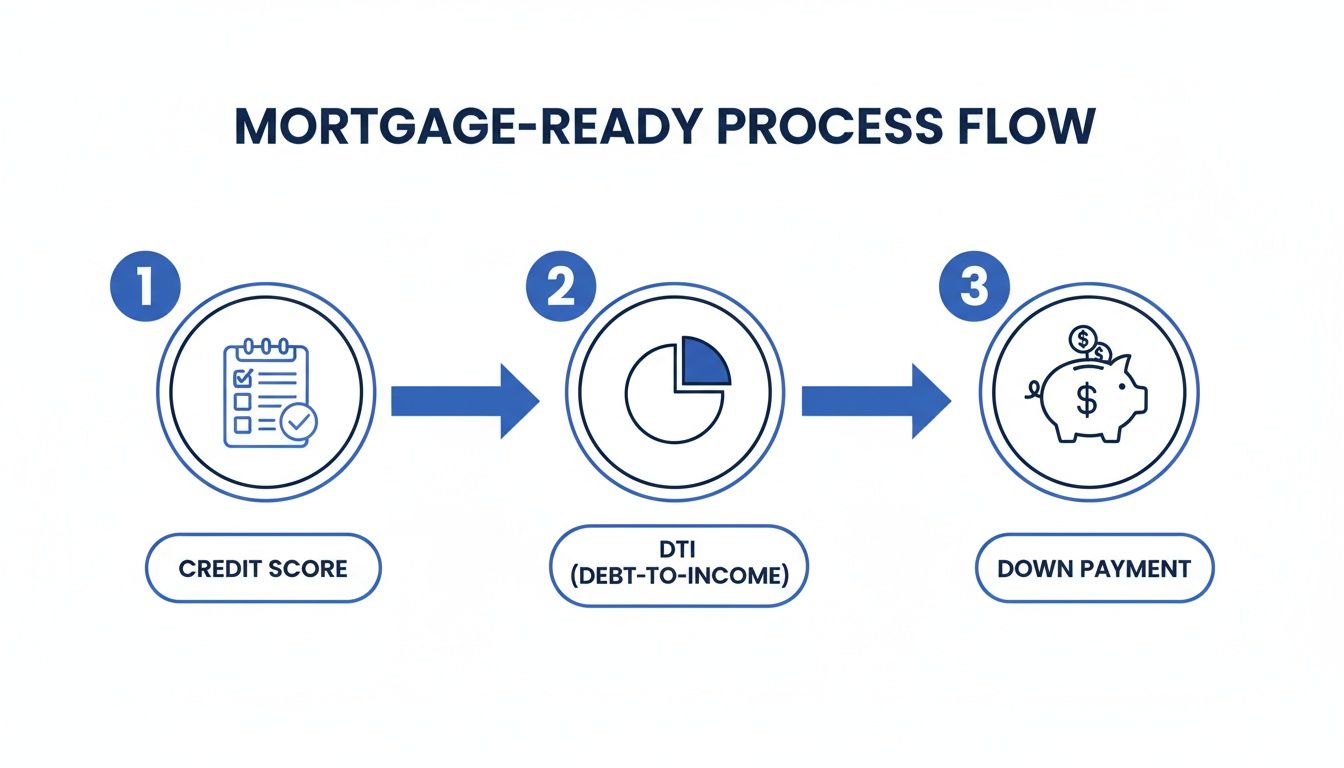
This simple flow shows how a deal's own "creditworthiness" (its key metrics), its "DTI" (income vs. expenses), and its "down payment" (your upfront cash) are the three pillars of a sound investment.
Cash Flow Is King
This is the most fundamental question you can ask: will this property put money in your pocket every month? Cash flow is simply the profit you have left after paying all the bills.
The formula couldn't be simpler: Total Rental Income - Total Expenses = Cash Flow
"Total Expenses" has to include everything—your mortgage payment (both principal and interest), property taxes, insurance, and a buffer for vacancies (I always plan on 5-10% of gross rent), plus a separate fund for maintenance (another 5-10%). If you hire a pro, don't forget property management fees, too. A property with positive cash flow is the bedrock of any solid real estate investment.
Cash-on-Cash Return: Your True ROI
While cash flow tells you what you're making each month, your Cash-on-Cash (CoC) Return tells you how hard your initial investment is actually working for you. It’s a direct measure of your annual cash flow against the total amount of cash you pulled out of your pocket to make the deal happen.
Here’s the formula: (Annual Cash Flow / Total Cash Invested) x 100
"Total Cash Invested" is your down payment, all your closing costs, and any money you have to spend on renovations right after you buy. I typically look for a CoC return of 8-12% as a good target, but this can definitely change depending on your market.
For example, if you're pulling in $6,000 in annual cash flow after investing a total of $50,000, your CoC return is a very healthy 12%. This number is your best friend when comparing two different properties.
Capitalization Rate: The Market Benchmark
The Capitalization Rate, or Cap Rate, is a quick way to compare the potential return of properties without getting bogged down by financing details. It measures the property's unleveraged rate of return, as if you bought it with all cash.
The formula is: Net Operating Income (NOI) / Property Value
NOI is just your total rental income minus all of your operating expenses—but you exclude the mortgage payment. Generally, a higher cap rate suggests a higher potential return, but it can also signal higher risk. For instance, you might find a duplex in an affordable market for $169,900 that brings in $1,660 in monthly rent. A deal like that can boast an 8.3% cap rate and generate over $1,100 in monthly cash flow.
A tool like Property Scout 360 is designed to cut through the noise and prevent the "analysis paralysis" that hits so many new investors. Instead of getting stuck in a spreadsheet, you can plug in a property's numbers and get an instant, clear verdict on its potential.
If you want to understand the math behind these tools, our rental property analyzer spreadsheet is a great resource for seeing how all the calculations come together.
Getting Real with Due Diligence: Inspections and Renovations
You’ve got a duplex under contract. Feels great, right? Pop the champagne? Not so fast. The real work is just beginning. This next phase, due diligence, is where you roll up your sleeves and verify that the property you think you’re buying is the one you’re actually getting. It’s time to move beyond the pretty listing photos and get serious.
A standard home inspection is a decent starting point, but let's be clear: a duplex isn't a standard single-family home. It has shared systems, two separate living spaces, and a whole unique set of potential problems. Skimping on this step is how a great-looking deal turns into a money pit.
Beyond the Standard Inspection Checklist
When you hire an inspector, make it crystal clear you’re buying a multi-family property. They need to put extra focus on the components that serve both units. Your mission is to sniff out any of the "big ticket" items that could blow up your budget down the road.
Here’s what I always look for on a duplex inspection:
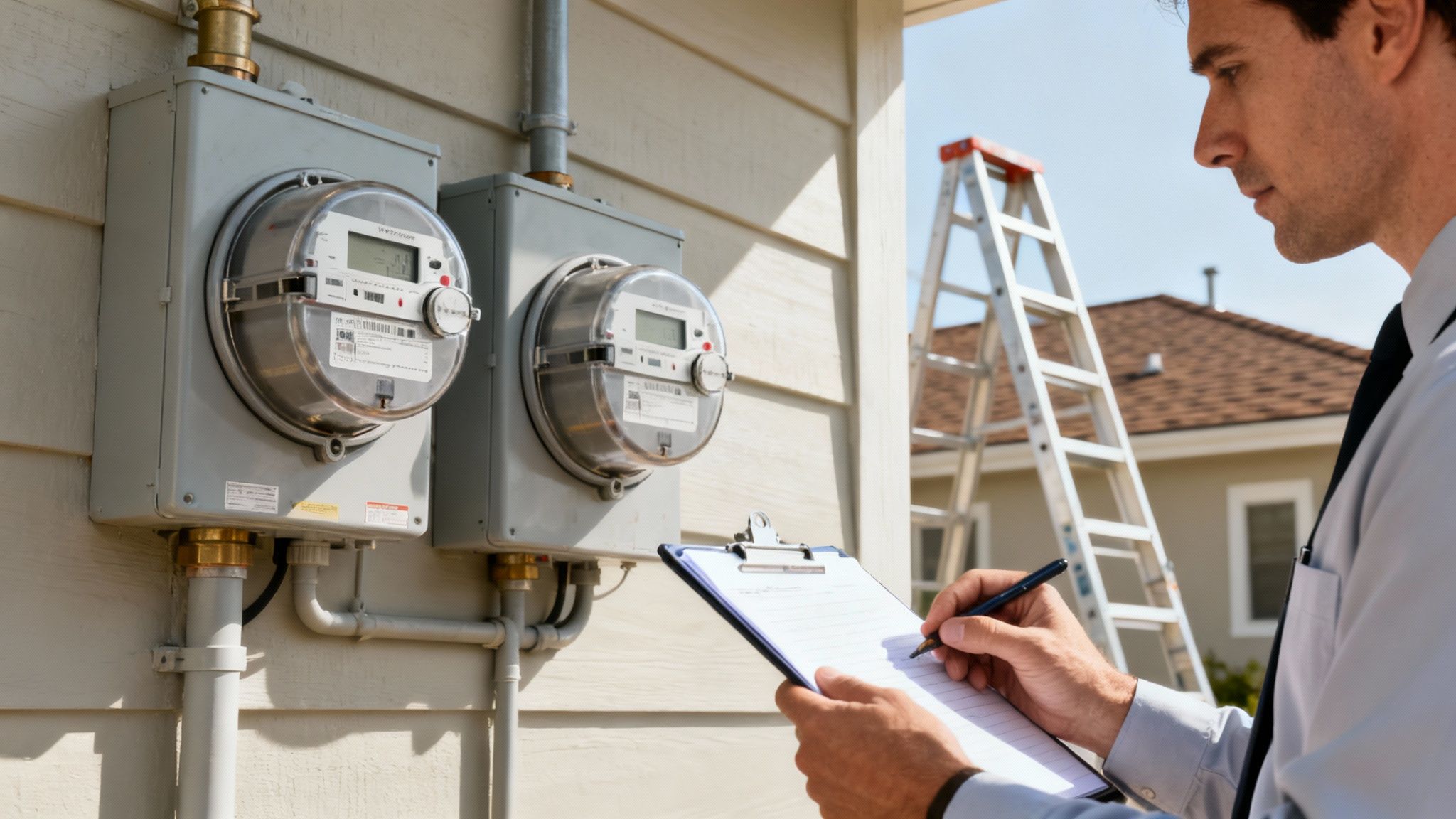
- Separate Utility Metering: Are the electric, gas, and water meters split for each unit? If not, you’re signing up for a major headache. You’ll either have to pay a small fortune to have them separated or navigate the nightmare of billing tenants for shared utilities.
- Health of Shared Systems: The roof, foundation, and main sewer line are the backbone of the entire building. A roof replacement can easily cost $10,000 or more, so you need an honest assessment of its remaining lifespan.
- Soundproofing Between Units: This is a big one that rookies often miss. Thin walls or floors are a one-way ticket to noise complaints and tenant turnover. During the walkthrough, have someone walk around upstairs while you listen from below.
- HVAC Systems: Does each unit have its own furnace and A/C? Shared systems mean you have no individual climate control and are on the hook for a massive replacement bill when it eventually dies.
A detailed inspection report isn’t just a list of problems—it’s negotiation leverage. A major issue discovered during due diligence is your opportunity to go back to the seller and renegotiate the price or ask for credits at closing.
Nailing Down Renovation Costs and After-Repair Value
Once that inspection report is in your hands, it’s time to turn problems into dollar signs. Don't just guess what repairs will cost. For any significant work, get at least two or three written quotes from licensed contractors. This is non-negotiable for accurately projecting your total investment.
Next, you need to calculate your After-Repair Value (ARV). This is simply the projected market value of the duplex after your planned renovations are complete. The ARV is what tells you if the whole project is even worth doing. To find it, you or your agent need to pull comps—recently sold, renovated duplexes in the immediate area.
The formula is simple but incredibly powerful: ARV - (Purchase Price + Renovation Costs) = Potential Equity. A healthy amount of equity on the back end confirms you’re actually adding value, not just spending money. If the duplex has an unfinished basement, exploring a guide on how to finish a basement can be a game-changer for adding square footage and seriously boosting rental income.
Why Buying and Renovating Almost Always Beats Building New
At some point, you might ask yourself, "Should I just build a new duplex from scratch?" For 99% of investors, especially those starting out, the answer is a hard no. Buying an existing property and renovating it is almost always the smarter, safer play.
Building from the ground up is a beast. The average cost to build a duplex today hovers around $402,000, with a typical range of $293,000 to $549,000. And those numbers don't even include the cost of the land itself, or the brutal 12-18 month timelines filled with permit delays, supply chain issues, and contractor drama. You can see a full cost breakdown in our article on the true cost of building a duplex.
When you buy an existing duplex, you sidestep all of that. You get a property in an established area, often with a proven rental history, and you can start generating income in a fraction of the time. This due diligence period is your golden opportunity to confirm the numbers, map out your value-add strategy, and lock in a profitable investment for the long haul.
Closing the Deal and Stepping into Your Landlord Role
You've navigated the financing maze, pinpointed the right duplex, and dug through all the due diligence. Now, it's time to bring it home. The closing process can feel like a final sprint through a mountain of paperwork, but it’s the very last step before those keys are officially yours.
Closing day is really all about signing your name—over and over again. You'll face a stack of documents, from the final closing disclosure to the promissory note (your formal IOU to the lender) and the deed of trust. As you get closer, having all your legal and financial ducks in a row is everything. Getting a handle on the finer points of real estate and title services is a smart move to make sure the ownership transfer is seamless.
What to Expect on Closing Day
Pay close attention to your closing disclosure. This five-page document breaks down every single dollar involved in the deal. By law, you should get this at least three business days before you sign, which gives you crucial time to review it carefully.
Here’s a quick rundown of what you’ll need to bring to the table:
- Two Forms of ID: Your driver's license and another government-issued ID will do the trick.
- A Cashier's Check: This is for your down payment and closing costs. The final, exact amount will be on your closing disclosure.
- Proof of Insurance: You absolutely must have your homeowner’s insurance policy for the duplex active and ready to go.
Once all the papers are signed, the money changes hands, and the county officially records the deed. Just like that, you own a duplex. Congratulations—you’re a landlord now.
Preparing for Your First Tenants
The moment you close, your hat changes from "buyer" to "property owner." If the duplex already has tenants, you've just inherited those relationships and need to start managing them from day one.
Make a professional introduction. Give them your contact information and clearly explain how they should pay rent and submit any maintenance requests from now on. It’s also vital that you get copies of the existing lease agreements. You need to know exactly what terms you’ve just become legally bound to uphold.
Key Takeaway: Kick things off on the right foot. A professional, respectful relationship is the bedrock of good property management. Clear communication and solid processes will save you countless headaches down the road and build real goodwill.
You’re stepping into this role at a pretty interesting time. Duplex investing is picking up steam in the current multifamily rebound, with analysts forecasting rent growth between 2.8% and 5.7% in major U.S. markets. This is largely driven by a slowdown in new construction and persistent demand from renters, making properties like yours a hot commodity.
Setting Up Your Landlord Systems
You don't want to become a stressed-out landlord. The key is to build simple, repeatable systems from the get-go. Keep it focused on the essentials that make your life easier and your tenants happy.
1. Create a Rock-Solid Lease Agreement
If you're bringing in new tenants, don't just download a generic template. Use a state-specific lease that covers all the critical details: rent amount, due dates, late fee policies, rules on pets, and who's responsible for what maintenance.
2. Streamline Rent Collection
Stop chasing checks before you even start. Set up an online payment system using a service like Zelle, Avail, or TenantCloud. It’s a huge convenience for your tenants and practically guarantees you get paid on time.
3. Establish a Maintenance Protocol
Have a clear, simple process for tenants to report issues. This could be a dedicated email address or a form through a property management app. It keeps everything documented in one place and helps you tackle repairs efficiently. This isn't just about fixing leaky faucets; it's about protecting the long-term value of your new asset.
Got Questions About Buying a Duplex? We've Got Answers
Even with the best guide in hand, a few questions always pop up when you're getting serious about buying your first duplex. Let's tackle some of the most common ones I hear from new investors so you can move forward with total confidence.
Is a Duplex Really a Good First Investment?
For most beginners, the answer is a resounding yes. A duplex is often the perfect launchpad into real estate investing, mainly because of one powerful strategy: house hacking.
Think about it: you live in one unit, and the rent from your tenant next door pays down a huge chunk of your mortgage. This move dramatically lowers your own living expenses and gives you a real-world, low-risk education in being a landlord. You learn the ropes while your asset helps pay for itself.
Plus, when you live in one of the units, you can qualify for owner-occupant loans (like an FHA loan) with incredibly low down payments. You get the cash flow of an investment property with the financing perks of a primary residence. It’s a brilliant way to build both equity and a new income stream right out of the gate.
A duplex isn't just a place to live; it's an income-generating machine you're buying. It's the rare purchase that actively puts money back in your pocket from day one.
How Is Financing a Duplex Different from a House?
It’s actually more similar than you’d think, especially if you plan on living there. You'll be looking at the same loan types—conventional, FHA, and VA.
But here’s the game-changing difference: lenders will let you use the future rent from the second unit to help you qualify for the loan. This is a massive advantage.
Typically, they’ll count 75% of the projected rent as part of your income, which can seriously boost your buying power. Just be ready for them to take a closer look at your cash reserves. Lenders want to be sure you can cover the full mortgage payment if the other unit sits empty for a month or two.
What are the Biggest Mistakes I Need to Avoid?
I see new investors make the same few preventable mistakes time and again. Dodging these is key to your long-term success.
- Underestimating the True Costs: Don't just focus on the mortgage. You have to budget for maintenance, vacancies, property management fees (even if you do it yourself, your time is valuable), and big-ticket items down the road like a roof or furnace. A solid rule of thumb is to set aside 5-10% of the gross rent for maintenance and another 5-10% for potential vacancies.
- Falling for a "Cheap" Property in a Bad Spot: A low price tag in an area with no jobs and high crime isn't a bargain—it's a money pit. You have to dig into the neighborhood data. Look at school ratings, job growth, and local trends. A slightly more expensive duplex in a great location will always outperform a cheap one in a declining area.
- Getting the Wrong Kind of Inspection: A standard home inspection just won't cut it. You need an inspector who understands multi-family properties. They'll look for critical issues like separate utility meters, the quality of soundproofing between units, and the condition of shared systems that a typical inspector might overlook.
Can I Actually Find Duplexes in My City?
Absolutely. You don't have to be in a massive city to find these deals. Modern real estate platforms can pull MLS data from just about anywhere in the U.S., letting you zero in on small multi-family properties right in your backyard.
Tools like Property Scout 360 let you filter for exactly what you want—price, cash-on-cash return, or minimum rental yield. This way, you’re not wasting time looking at properties that don’t fit your financial goals, whether you're in a major metro or a quiet suburb.
Ready to stop analyzing and start finding your first deal? Property Scout 360 gives you the tools to run the numbers on a property in minutes, not weeks. Instantly see the cash flow, ROI, and cap rate so you can make smart, data-driven decisions. Find your next profitable investment with confidence.
About the Author
Related Articles
2026 Investor's Guide: Cost of Installing a Sewer Clean Out
Understand the cost of installing a sewer clean out for investment properties in 2026. Get expert advice on prices, ROI, & budgeting for flips. Plan smart!
15 Year vs 30 Year Mortgage: The Investor's Choice
Deciding between a 15 year vs 30 year mortgage for a rental property? Our guide analyzes cash flow, ROI, and equity to help you pick the best loan.
Real Estate Appraisal Software: Features & Limits
Discover what real estate appraisal software is, its core features, and limits. See how it differs from investment tools for profitable deals.
