How to Buy Your First Rental Property a Practical Guide
Learn how to buy your first rental property with our guide on financing, market analysis, and deal evaluation. Get actionable advice for new investors.
Buying your first rental property really just comes down to a clear, repeatable process. You have to secure your financing, find a market that actually makes sense, analyze the numbers on specific deals, and then do your homework before closing.
If you can master those four pillars, what feels like a huge, intimidating goal becomes a smart, achievable way to build wealth. This isn't about getting lucky; it's all about doing the right prep work.
Building Your Financial Foundation for Real Estate

Before you even start scrolling through listings, the most critical work happens with your own finances. Getting your financial house in order is the absolute, non-negotiable first step. I've seen it happen: without this solid foundation, even a seemingly perfect deal can turn into a nightmare. This prep phase is all about creating a launchpad so your first purchase is a confident, data-backed decision—not a shot in the dark.
Your journey starts with a simple question: why are you doing this? Knowing your primary goal will steer every decision you make, from the kind of property you target to the loan you get.
- Cash Flow: Is your main goal to have a property that brings in more rent each month than it costs to run? This gives you immediate income, but you'll often find these deals in markets that don't grow as quickly.
- Appreciation: Are you okay with breaking even (or even losing a little money each month) for the chance that the property's value will shoot up over time? This is a common play in high-growth, in-demand cities.
- A Hybrid Approach: Honestly, this is where most new investors should land. You want a property that generates at least some positive cash flow while being in an area with a good chance of appreciating.
Budgeting for Your First Purchase
A classic rookie mistake is underestimating how much cash you actually need to close a deal. It's so much more than just the down payment. I tell every new investor to think about their upfront costs in three separate buckets:
- Down Payment: For a standard investment property loan, you can expect lenders to require 20-25% of the purchase price. So, for a $250,000 property, you're looking at a hefty $50,000 to $62,500 right off the bat.
- Closing Costs: These are all the fees to make the deal official. A safe bet is to budget another 3-5% of the purchase price to cover things like the appraisal, loan origination fees, title insurance, and other paperwork.
- Cash Reserves: This is your emergency fund, and it's your best friend. Lenders will often want to see that you have 3-6 months of total expenses (your full mortgage payment, taxes, and insurance) sitting in a separate account. This fund is what saves you when a tenant moves out unexpectedly or the furnace dies in January.
A critical takeaway for new investors: your cash reserves are not optional. Without them, a single bad month can derail your entire investment.
Exploring Your Financing Options
Getting a loan for an investment property isn't the same as for your own home. Lenders see it as a higher-risk venture, which translates to tougher requirements and slightly higher interest rates.
Conventional Loans
This is the most common route for first-timers. You'll work with a bank or mortgage broker, and they’ll want to see a strong credit score (think 720 or higher for the best rates), a low debt-to-income ratio, and proof you have the down payment and reserves. To get a realistic idea of what your monthly costs might be, map everything out using a good rental income and expenses spreadsheet. This lets you model your mortgage payment against all the other costs.
House Hacking with FHA Loans
Here’s a powerful strategy, especially for your very first property: "house hacking." The idea is to buy a multi-family property (a duplex, triplex, or fourplex), live in one of the units, and rent out the others. Because you're living there, you can qualify for an FHA loan, which lets you put down as little as 3.5%. The best part? The rent from your neighbors can cover a huge chunk of your mortgage, sometimes even all of it.
Finding a Profitable Market and Neighborhood
Every seasoned investor will tell you the same thing: "location, location, location." It sounds like a cliché, but for a rental property, it's the absolute bedrock of your investment. A beautiful house in a declining area is a financial trap waiting to happen, while a decent property in a thriving neighborhood can churn out reliable income for decades.
Your first job is to stop thinking like a homebuyer and start thinking like an investor. You need to find markets where people actually want to live, work, and—most importantly—rent. This isn't about chasing the hottest, most expensive cities. It's about pinpointing areas with solid economic fundamentals that can support a healthy, long-term rental market.
What a Strong Rental Market Looks Like
Before you even start looking at Zillow listings, you need to zoom out and look at the whole metropolitan area. A strong city economy creates a steady stream of qualified tenants, which is exactly what you need.
So, what are the tell-tale signs of a promising market?
- Diverse Job Growth: Look for cities with a healthy mix of industries—think healthcare, tech, education, and logistics. A town propped up by a single factory is a huge risk. If that one industry stumbles, your entire tenant pool could vanish overnight.
- Positive Population Trends: This one's simple: are people moving in or moving out? Consistent population growth is a powerful signal of a healthy economy and growing demand for housing.
- Low Vacancy Rates: A rental vacancy rate below 5% is generally the sweet spot. It tells you that demand is outpacing supply, which gives you, the landlord, more leverage when setting rent and choosing tenants.
This macroeconomic environment is creating huge opportunities right now. In fact, during the first half of 2025, investors made up a record-breaking 30% of all single-family home purchases in the U.S. High mortgage rates are sidelining many traditional buyers, pushing more people into the rental market and fueling demand, especially in high-growth areas.
Remember this: You're not just buying a house; you're buying into a local economy. Make sure it's a healthy one.
Zooming In on the Right Neighborhood
Once you’ve got a couple of promising cities on your list, it's time to get granular. Even within a great metro area, not all neighborhoods are created equal. Your goal is to find those specific pockets where rentals perform best. For a deeper look at specific locations, our guide on the best cities to invest in rental property is a great place to start.
This is where you shift from spreadsheets to street-level reality. A neighborhood might look good on paper, but you need to confirm it has the qualities that attract and keep good tenants.
A great way to approach this is by looking at a few key data points that really matter for a rental's success. This table breaks down what you should be looking for.
Key Market Indicators for Rental Property Investors
| Indicator | What to Look For | Why It Matters |
|---|---|---|
| Property Taxes | Lower tax rates (relative to the metro area) | Sky-high property taxes can absolutely destroy your cash flow, turning a profitable property into a money pit. |
| School Ratings | Highly-rated public schools | Good schools are a magnet for families, who often make for stable, long-term tenants willing to pay a premium. |
| Crime Rates | Low and decreasing crime statistics | Safety is a non-negotiable for almost every renter. Low crime rates lead to lower vacancy and higher property values. |
| Amenities | Proximity to parks, grocery stores, and cafes | Walkability and convenient access to lifestyle amenities are huge selling points for quality tenants. |
Looking at these factors side-by-side helps you cut through the noise and make a direct comparison between different neighborhoods you're considering.
Don't Forget the Local Laws and Regulations
The final, and often overlooked, piece of the puzzle is the legal landscape. Landlord-tenant laws can vary wildly between cities and states. Some are incredibly landlord-friendly, while others can be a nightmare.
Before you get serious about a market, you must investigate:
- Eviction Processes: How hard is it to evict a tenant who stops paying? A lengthy, expensive court process can be financially devastating for a new investor.
- Rent Control Rules: Are there any local laws that cap how much you can raise the rent? Rent control can seriously limit your property's income potential over the long haul.
- Licensing and Inspections: Does the city demand special rental licenses, registrations, or routine inspections? These all add costs and administrative headaches you need to budget for.
Skipping this research is a rookie mistake that can lead to costly legal battles and unexpected expenses. A truly profitable market is one where the economic fundamentals are strong and the regulatory environment is fair and predictable. This is how you move from just guessing to making a smart, data-driven decision on where to buy your first rental property.
How to Analyze a Potential Rental Property Like a Pro
Once you’ve found a promising market, the real detective work starts. This is where you have to look past the fresh paint and nice landscaping to figure out if a property will actually put money in your pocket.
Honestly, learning to run the numbers is the single most important skill you can develop as an investor. Getting this wrong is the #1 reason first-time investors lose money. The good news? The math isn't that complicated once you know what to look for.
Getting a Handle on the Core Metrics
You’ll hear investors throw around terms like “Cap Rate” and “Cash-on-Cash Return.” Don't let the jargon scare you off. These are just simple ways to compare different properties and see how your investment is performing.
Let's break them down.
- Cash Flow: This one’s the most important, especially for your first property. It’s simply the money left over each month after you’ve collected rent and paid all the bills—the mortgage, taxes, insurance, repairs, you name it. Positive cash flow is your monthly paycheck and your safety net.
- Cash-on-Cash (CoC) Return: This metric tells you how hard the actual cash you put into the deal is working. Let's say your annual cash flow is $3,000 and you invested $50,000 (for the down payment and closing costs). Your CoC Return would be 6%. It’s a great way to compare the performance of different deals.
- Capitalization (Cap) Rate: Think of this as a way to judge a property’s profitability without factoring in your specific loan. You calculate it by dividing the Net Operating Income (NOI) by the purchase price. A higher cap rate often means a higher return, but it can also signal higher risk.
This whole process is about starting broad and then zooming in, from the market level right down to a specific house on a specific street.
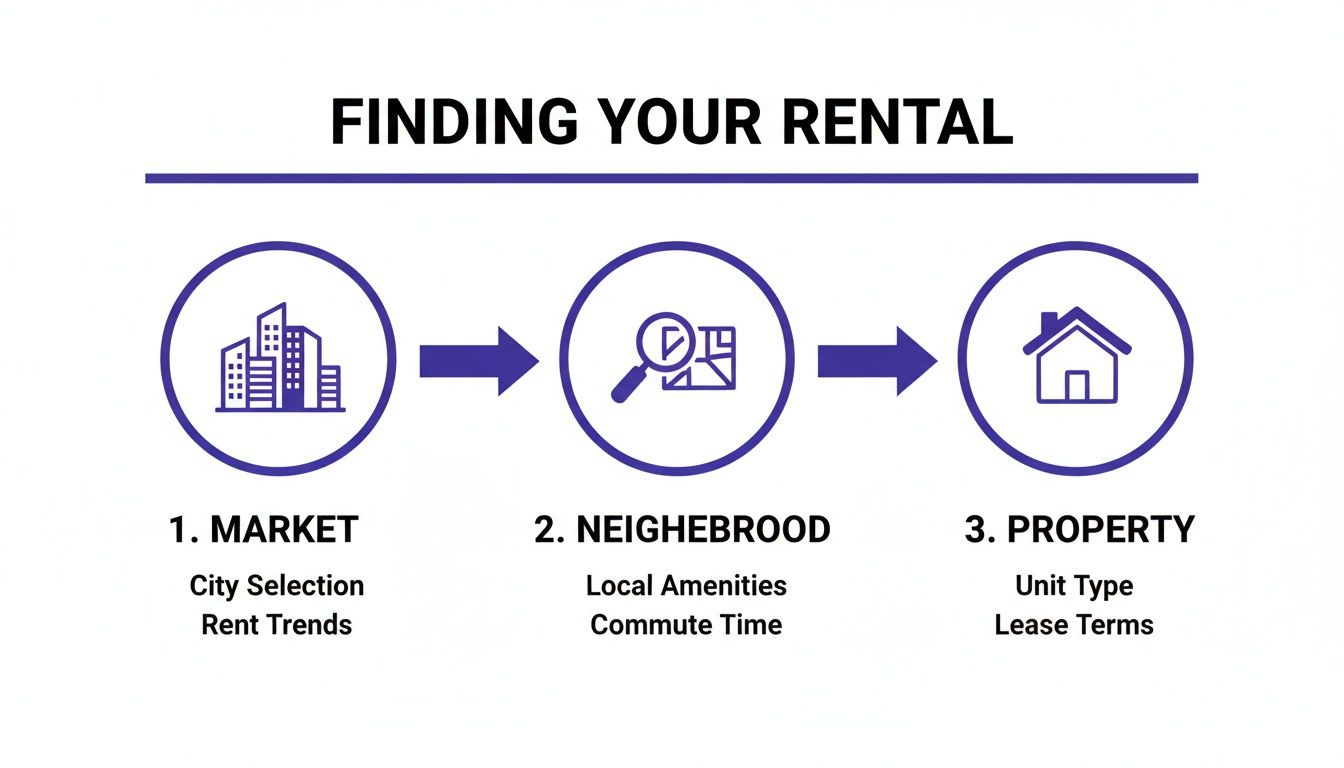
Each step helps you filter out the duds, so you’re only spending time analyzing properties in areas that already have solid fundamentals.
Let's Run the Numbers: A Real-World Example
To make this less abstract, let’s walk through the numbers on a typical single-family home. Seeing it in action makes these concepts click.
Sample Property Details
- Purchase Price: $250,000
- Down Payment (20%): $50,000
- Closing Costs (3%): $7,500
- Total Cash Invested: $57,500
- Loan Amount: $200,000 at 7% interest
Next, we need to map out every single expense. This is where a lot of new investors get into trouble—they get too optimistic and forget to account for everything.
| Income & Expenses | Monthly Amount | Annual Amount |
|---|---|---|
| Gross Monthly Rent | $2,100 | $25,200 |
| Mortgage (P&I) | $1,331 | $15,972 |
| Property Taxes | $250 | $3,000 |
| Homeowners Insurance | $100 | $1,200 |
| Vacancy (5% of rent) | $105 | $1,260 |
| Repairs & Maintenance (8%) | $168 | $2,016 |
| Property Management (10%) | $210 | $2,520 |
| Total Monthly Expenses | $2,164 | $25,968 |
Looking at the table, you can see the monthly cash flow is negative $64 ($2,100 in rent minus $2,164 in expenses). This property would literally cost you money every month just to own it. This is exactly the kind of financial mistake you avoid by running the numbers before you ever make an offer. We cover more scenarios in our deep dive on real estate investment property analysis.
Using Technology to Speed Up Your Analysis
Building a spreadsheet from scratch for every single property you look at gets old fast. It's not just tedious; it's also easy to make a mistake. This is where a tool like Property Scout 360 becomes a game-changer, especially when you're just starting out.
Instead of wrestling with formulas, you can plug in a property's details and get a complete financial breakdown in seconds. This means you can analyze dozens of potential deals in the time it used to take to do one, which dramatically increases your odds of finding a winner.
The goal isn't just to find a deal that works—it's to find the best deal you can. The more properties you can analyze, the better your chances are of landing a true home run.
Analyzing a property is about swapping emotion and gut feelings for cold, hard data. When you master these numbers and use the right tools, you can make your first investment with confidence. That discipline is what separates successful, long-term investors from people who just get lucky once.
Navigating Inspections and Due Diligence
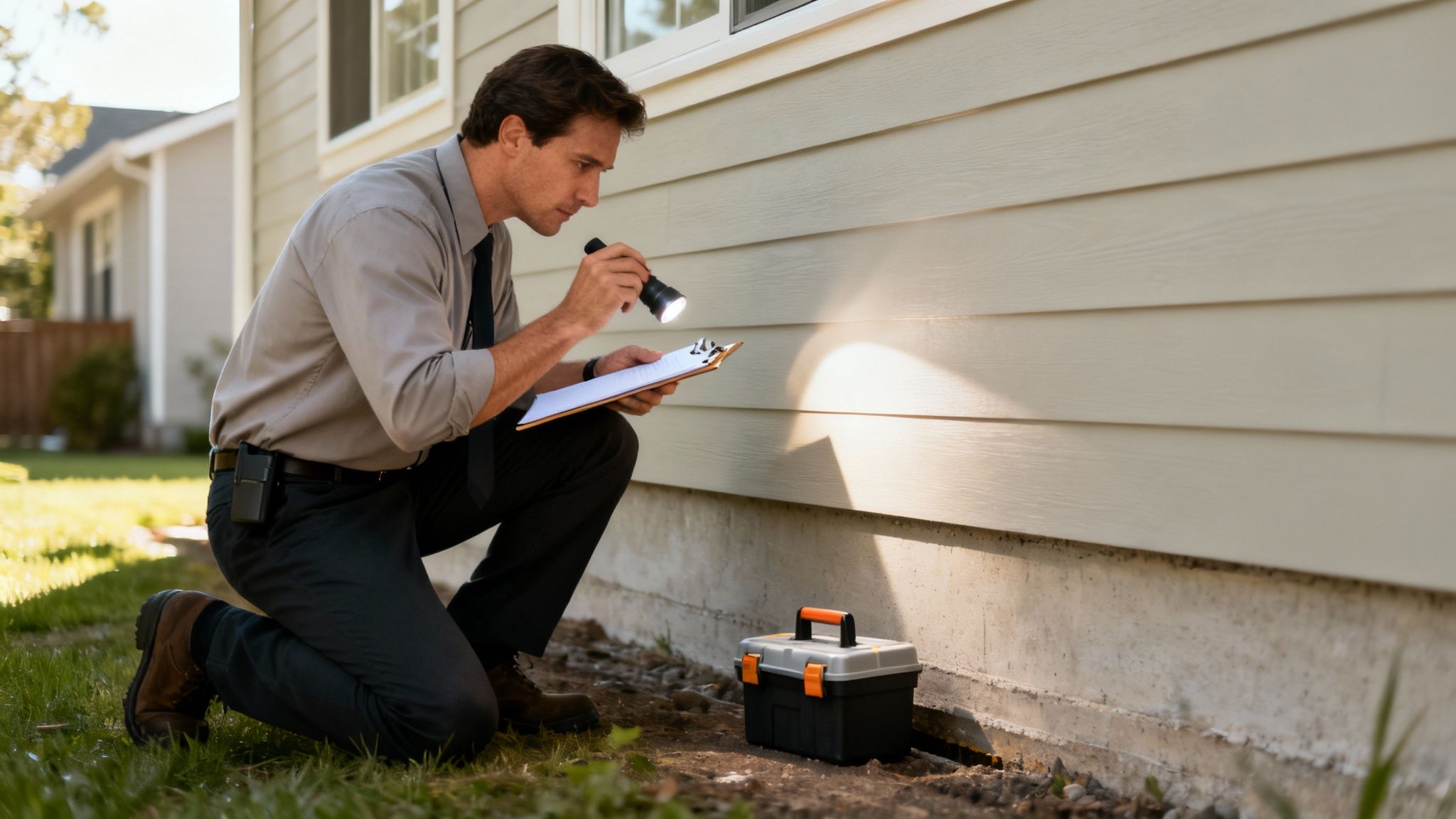
Getting your offer accepted feels incredible, like you've already crossed the finish line. But in reality, the most critical phase is just beginning. This is the due diligence period, and it’s where you shift your mindset from an optimistic homebuyer to a detail-obsessed investor.
Your job now is to protect your capital by kicking the tires and looking under the hood. This is your one chance to uncover the gremlins hiding behind the fresh paint and staging—the issues that never make it into a property listing.
Trust me, rushing this part is the costliest mistake a new investor can make. A thorough investigation is your only real defense against the kinds of surprises that can sink your returns for years. Think of it as a final, intense interview before you officially "hire" this property to make you money.
The Professional Home Inspection
Your first move is to bring in a qualified, independent home inspector. Don't just accept your agent's recommendation without doing your own homework—check reviews, verify certifications, and make sure they have a reputation for being nitpicky. This person works for you, and their only job is to find every single flaw, from the foundation to the shingles.
The inspection report isn't just a list of problems; it’s your single most powerful negotiation tool. It gives you a roadmap of the home’s major systems, clarifying what needs fixing now and what big-ticket expenses are looming on the horizon.
- Structural and Foundation: Are there hairline cracks or signs of serious shifting? Foundation problems are budget-killers, period.
- Roofing: How much life is left in that roof? A good inspector can give you a solid estimate, saving you from an unexpected $10,000+ bill right after closing.
- HVAC System: The age and condition of the furnace and A/C are non-negotiable details. A system limping toward the end of its typical 15–20-year lifespan is a major expense you need to plan for.
- Electrical and Plumbing: An inspector can spot outdated knob-and-tube wiring or galvanized pipes, which are not only expensive to replace but can also be serious safety hazards.
When the report comes back, learn to see past the small stuff. A sticky doorknob is your problem. A furnace on its last legs? That’s your leverage to go back to the seller and renegotiate the price or demand repairs.
Beyond the Physical Inspection
A home inspector handles the physical structure, but your detective work doesn't end there. You also have to dig into the property's legal and financial background to ensure there are no hidden skeletons in the closet. This is especially true if you're inheriting tenants.
Essential Document Review
- Title Report: Your title company is your best friend here. They'll run a search for any liens, judgments, or claims against the property. You need a clear title to guarantee you’re the sole, rightful owner.
- Zoning and Local Ordinances: Double-check that the property is properly zoned for rental use. You also want to look for any local restrictions or HOA rules that could derail your plans.
- Existing Leases: If you're buying a tenanted property, you must review the current leases. You're about to become their new landlord, so you need to know exactly what you’re inheriting—the rent amount, the security deposit held, and the lease expiration date.
This is the phase where you confirm the property you thought you were buying is the one you’re actually getting. Spending a few hundred dollars on a top-notch inspection can easily save you tens of thousands down the road. It’s one of the highest-return investments you'll make in the entire process.
Closing the Deal and Launching Your Rental Business
Getting to the closing table is a huge milestone, but it’s not the finish line. Think of it as the official starting gun for your real estate investing career. This is where you shift from being a buyer to a business owner, and the moves you make now will set the tone for your long-term success.
The closing day itself can feel a bit formal. You'll meet with a title agent or an attorney, sign what feels like a mountain of paperwork, and hand over a certified check for your down payment and closing costs. A huge part of this is navigating the final real estate contracts, so make sure you understand what you're signing. Once the ink is dry and the money has changed hands, the keys are yours. Congratulations!
Your First Moves as a New Landlord
With keys in hand, your focus has to pivot immediately to getting the property rent-ready. The first few days are critical. Don't be tempted to rush this part; a well-prepared home not only attracts higher-quality tenants but also lets you charge a premium rent.
Here’s a quick checklist of your immediate priorities:
- Change the locks. Always. You never know who has a spare key.
- Deep clean everything. A sparkling clean unit makes a fantastic first impression.
- Tackle necessary repairs. Address any issues found during the inspection or any small improvements you planned.
- Check safety features. Install new smoke and carbon monoxide detectors to ensure the property is safe and up to code.
Now is also the time to lock in your final rent price. Look at what similar places in the neighborhood are renting for. You want to find that sweet spot—high enough to maximize your return but not so high that you scare away good applicants. Remember, a vacant property is your single biggest expense.
Self-Management vs. Professional Management
One of the biggest forks in the road for a new landlord is deciding whether to manage the property yourself or hire a professional. There's no one-size-fits-all answer here. It really boils down to your available time, how close you live, and your comfort level with handling tenant issues.
Going the DIY Route
Managing the property yourself means you get to keep the 8-12% management fee that would otherwise go to a pro. That cash goes straight to your bottom line, boosting your monthly cash flow. You also get an incredible hands-on education in being a landlord. This approach works great if you live nearby and have a flexible schedule to deal with a leaky faucet or a late-night phone call.
Hiring a Property Manager
A solid property manager is worth their weight in gold. They handle it all: marketing the unit, screening tenants, collecting rent, and fielding those emergency repair calls. This is often the best path for investors who live far away or simply want a more hands-off, passive investment. The fee can feel like a small price to pay for your time and sanity.
No matter which route you take, the goal is the same: build a system. Document every single process, from how you screen applicants to how you handle maintenance requests. This ensures you're running a professional business right from day one.
Building Your Tenant and Lease Foundation
Once the property is ready to go, it's time to find a fantastic tenant and lock them in with an ironclad lease.
Your first step is effective marketing. Take high-quality photos—this isn't the time for blurry phone pics! Write a compelling description that sells the property's best features, and post your listing on all the popular rental sites.
As the applications roll in, a consistent and thorough screening process is your best friend.
- Run a background and credit check on every single adult applicant. No exceptions.
- Verify their income. Make sure they can comfortably afford the rent without stretching themselves thin.
- Call their previous landlords. Ask about their payment history and how they maintained the property. This is an absolute goldmine of information.
Once you’ve found your ideal tenant, the lease agreement becomes your most important tool. It needs to clearly spell out every term, including the rent amount, due dates, late fees, and specific rules about things like pets or property alterations. Never, ever rely on a verbal agreement. If it’s not in the written lease, it’s not enforceable.
Getting these details right is especially important in the current market. With rent growth for U.S. rentals averaging 4.2% year-over-year in Q1 2025, it’s a stable time to get started. Plus, 71% of landlords are feeling optimistic about their profitability, which should give you confidence as you launch your own rental business. Discover more insights about these rental market trends.
Burning Questions Every First-Time Rental Investor Asks
Jumping into real estate investing for the first time is exciting, but it also brings a flood of questions. Getting straight answers is what separates a confident first purchase from being stuck in "analysis paralysis." Let's walk through some of the biggest questions and concerns that pop up when you're figuring this all out.
This isn't theory. These are the real-world hurdles you'll face. The goal here is to give you enough clarity to make smart moves from day one.
How Much Cash Do I Really Need to Get Started?
This is usually the first question on everyone's mind, and it's about more than just the down payment. For a standard investment property loan, you'll need to plan on putting down 20-25% of the purchase price.
But the cash you'll need doesn't stop there. You should also budget an extra 3-5% for closing costs—this covers all the fees for things like the appraisal, title insurance, and loan origination that make the deal official. Most importantly, you need a safety net. Lenders will often want to see that you have 3-6 months of total expenses (your full mortgage payment, taxes, and insurance) sitting in the bank. This reserve is your buffer for vacancies or those surprise repairs that always seem to happen.
Should I Buy a Single-Family Home or a Multi-Family?
Ah, the classic debate. There’s no single right answer here; it really comes down to your personal goals and financial comfort level.
- Single-Family Homes: These properties tend to attract stable, long-term tenants—think families who might stay for several school years. From a management perspective, they're simpler. And when it's time to sell, you have a broader audience of potential buyers that includes both investors and regular homebuyers.
- Multi-Family Properties: With a duplex or a triplex, you get multiple income streams from a single property. This is great for your monthly cash flow and provides a cushion if one unit is empty. This is also the core idea behind "house hacking," where you can live in one unit while the rent from the others covers your mortgage.
Of course, other property types come with their own unique questions. For instance, people often ask, "Can You Rent Out a Condo?" That's a great question, but it means you'll have to dig into HOA rules and factor their fees into your calculations.
What Are the Biggest Mistakes I Need to Avoid?
Honestly, the most expensive mistakes almost always come from cutting corners on due diligence. It's easy to get caught up in the excitement of a potential deal and overlook the red flags.
The best investors I know are disciplined, not emotional. They stick to their criteria and trust the numbers, even if it means walking away from a property that looks great on the surface.
Here are the rookie mistakes that can sink your investment:
- Underestimating Expenses: It’s a classic. New investors budget for the mortgage but forget about the big-ticket items (a new roof in 10 years), ongoing maintenance, and the inevitable vacancy. This is a fast track to negative cash flow.
- Ignoring the Market: Buying a cheap house in an area with no jobs and shrinking rental demand is a fatal error. A great property in a bad market is still a bad investment.
- Skipping Tenant Screening: Not running proper background and credit checks is the quickest way to find yourself with a tenant who won't pay, which kicks off a long and expensive eviction process.
- Buying with Your Heart, Not Your Head: Falling in love with the granite countertops instead of the return on investment is a trap. The numbers have to work, period. Your gut feeling doesn't pay the mortgage.
Avoiding these pitfalls really just comes down to having a solid process. Analyze every deal with a critical eye, stick to your numbers, and never, ever skip the inspection.
Don't let analysis paralysis stop you. With Property Scout 360, you can run the numbers on dozens of properties in minutes, comparing financing scenarios and getting a clear picture of your potential return on investment. Make your first deal a data-driven success at https://propertyscout360.com.
About the Author
Related Articles
2026 Investor's Guide: Cost of Installing a Sewer Clean Out
Understand the cost of installing a sewer clean out for investment properties in 2026. Get expert advice on prices, ROI, & budgeting for flips. Plan smart!
15 Year vs 30 Year Mortgage: The Investor's Choice
Deciding between a 15 year vs 30 year mortgage for a rental property? Our guide analyzes cash flow, ROI, and equity to help you pick the best loan.
Real Estate Appraisal Software: Features & Limits
Discover what real estate appraisal software is, its core features, and limits. See how it differs from investment tools for profitable deals.
