The Ultimate House Flipping Checklist: 10 Steps for 2025
Master your next project with our ultimate house flipping checklist. This guide covers due diligence, budgeting, rehab, and sale for maximum ROI.
House flipping promises thrilling transformations and substantial profits, but the reality is a high-stakes game of precision, planning, and execution. One miscalculation in your budget or a missed inspection item can turn a dream investment into a financial nightmare. Success isn't about luck; it's about following a meticulous process that mitigates risk at every turn. The difference between a profitable venture and a costly mistake often comes down to the quality of your operational plan.
This comprehensive house flipping checklist is your strategic blueprint, designed to guide you through every critical phase, from initial market analysis to the final sale. We'll move beyond generic advice to provide a detailed, stage-by-stage roadmap, ensuring you manage risks, control costs, and maximize your return on investment. This guide is built for investors who demand data-driven strategies and actionable steps. For a deeper dive into the world of real estate ventures, gaining a comprehensive understanding of investment properties is essential.
Think of this article not just as a list, but as a project management framework for your next flip. We will cover ten crucial stages:
- Property Analysis and Market Research
- Inspection and Due Diligence
- Financing and Securing Capital
- Accurate Renovation Budgeting
- Contractor Selection and Team Building
- Permits, Codes, and Legal Compliance
- Design and Aesthetic Modernization
- Project Timeline Management
- Marketing and Sale Preparation
- Exit Strategy and Profit Analysis
Let's build your flipping success from the ground up, starting with the foundational step of identifying and analyzing the right property.
1. Property Analysis and Market Research
Before you even think about demolition or design, the most critical step in any house flipping checklist is rigorous property analysis and market research. This foundational due diligence involves a deep dive into the specific property's potential and the economic health of the surrounding market. It's the phase where you confirm if a deal has a realistic chance of profitability or if it's a financial pitfall in disguise.
Understanding the "Why" and "Where"
Effective market research goes beyond just looking at a property's list price. It’s about understanding the neighborhood's trajectory. For instance, successful flippers in rapidly growing cities like Austin, Texas, analyze tech company expansions to predict which neighborhoods will see the next surge in housing demand. They get ahead of the curve, buying before appreciation fully kicks in. This proactive approach sets the stage for maximum profit potential.
Executing Your Analysis
A comprehensive analysis requires gathering data from multiple sources to build a complete picture. This process confirms the After Repair Value (ARV), which is the cornerstone of your entire project budget and profit calculation.
- Gather Comparables (Comps): Analyze at least three to five similar properties that have sold within the last three to six months. Focus on homes with comparable square footage, bed/bath count, and lot size. For a detailed guide on this process, you can find valuable resources on how to pull free real-estate comps.
- Neighborhood Reconnaissance: Drive, walk, or bike through the neighborhood at different times of the day and week. Assess traffic patterns, noise levels, and the overall condition of neighboring homes.
- Check Local Development: Visit the local planning or building department's website to check for approved permits. Major upcoming commercial or infrastructure projects can significantly boost property values.
- Consult Local Experts: Interview real estate agents who specialize in the area. They possess invaluable "on-the-ground" insights that data alone can't provide.
Key Insight: Your initial market research dictates your maximum purchase price. By accurately forecasting the ARV and estimating repair costs, you can work backward to determine a purchase offer that protects your profit margin from the start. This single step prevents overpaying and ensures the flip is viable before you invest a single dollar.
2. Property Inspection and Due Diligence
After identifying a promising property, the next critical step in your house flipping checklist is a thorough, professional inspection and comprehensive due diligence. This stage moves beyond market data to uncover the physical realities of the asset. It’s where you identify structural issues, mechanical problems, code violations, and other hidden defects that could decimate your renovation budget and timeline.

Uncovering the "What" and "How Much"
A standard inspection report is your first line of defense against unforeseen costs. It transforms your estimated repair budget into a data-backed financial plan. For example, experienced flippers in older Midwest cities frequently encounter foundation issues. Catching a significant foundation crack during inspection allows them to either negotiate a lower purchase price to cover the $10,000+ repair or walk away, saving them from a project that was doomed from the start.
Executing Your Inspection
A meticulous due diligence process involves hiring licensed professionals to evaluate every major system and potential hazard. This isn't a step to cut corners on; the cost of a good inspection is minuscule compared to the cost of a missed problem.
- Hire Certified Professionals: Engage an inspector certified by a reputable organization like the American Society of Home Inspectors (ASHI). Their standards ensure a comprehensive evaluation of the property's condition.
- Attend the Inspection: Be present during the inspection. This allows you to see issues firsthand, ask the inspector questions, and gain a much deeper understanding of the property's systems and potential quirks.
- Seek Specialized Experts: For older homes or properties showing signs of specific issues, don't hesitate to order separate, specialized inspections. This includes bringing in structural engineers for foundation concerns, pest control for termite checks, or environmental specialists for mold and asbestos.
- Check for Code Compliance: Ask your inspector to specifically look for items that do not meet current local building codes. Bringing outdated electrical or plumbing systems up to code can be a significant and often overlooked expense.
Key Insight: The inspection report is a powerful negotiation tool. Use the detailed findings and repair estimates to go back to the seller and negotiate a price reduction or seller credits. A well-documented list of necessary repairs provides objective leverage that can save you thousands of dollars, directly protecting your bottom line.
3. Financing and Securing Capital
Once you've validated a property's potential, the next critical hurdle in your house flipping checklist is securing the necessary capital. Your financing strategy is the engine that drives the entire project, directly influencing your timeline, budget flexibility, and overall profitability. Choosing the wrong funding can cripple a deal with high costs, while the right capital allows you to move quickly and maximize returns.
Understanding the "How" and "How Much"
Effective financing goes beyond simply getting a loan; it's about aligning the capital source with the project's specific needs. For example, successful flippers in competitive markets like San Diego often leverage hard money loans. While these carry higher interest rates, often around 12%, they offer the speed necessary to close on a hot property in days, not weeks, beating out slower, traditionally financed offers. This strategic choice of capital provides a crucial competitive advantage.
Executing Your Financing Strategy
A comprehensive financing plan involves exploring multiple avenues and understanding the true cost of capital for each. This process ensures you have sufficient funds not only for the purchase but also for renovations and unexpected contingencies, protecting your project from cash flow shortages.
- Explore Funding Options: Evaluate various sources, including traditional bank loans, private money from individuals or syndicates, and hard money lenders. Each comes with different terms, rates, and approval speeds.
- Compare Lender Terms: When considering loans, look beyond the interest rate. Scrutinize origination fees, prepayment penalties, and the required down payment. Build relationships with portfolio lenders who specialize in investment properties and understand the flipping model.
- Build a Cash Reserve: Never allocate 100% of your capital to the purchase and renovation budget. A healthy contingency fund, typically 10-20% of the total project cost, is essential for covering unforeseen issues like hidden structural damage or permit delays.
- Consider Creative Financing: In some cases, you can negotiate directly with the seller. For a detailed guide on this approach, you can learn more about how a seller note works. This can be an effective way to structure a deal with favorable terms.
Key Insight: The speed and cost of your capital are just as important as the purchase price of the property. Your financing structure dictates your ability to acquire the deal, the holding costs you'll incur, and ultimately, your final ROI. Secure your funding strategy before making an offer to ensure you can close confidently and on schedule.
4. Accurate Renovation Budget and Cost Estimation
Once you've confirmed a property's potential, the next pivotal item on your house flipping checklist is creating an ironclad renovation budget. This isn't just a rough guess; it’s a detailed, line-by-line financial plan that accounts for every foreseeable expense. A precise budget is the primary tool that protects your profit margin and prevents a promising flip from becoming a financial drain.
Understanding the "Why" and "Where"
Effective budgeting is about granularity and anticipating costs before they arise. It’s the difference between a successful project and one that spirals out of control. For example, successful flippers in markets like California, where renovation costs are high, might budget a complete kitchen remodel between $50,000 and $75,000. This figure is not arbitrary; it's based on local labor rates, material costs, and permit fees. This level of detail is crucial for securing financing and ensuring the final numbers align with your projected After Repair Value (ARV).
Executing Your Analysis
Building a comprehensive renovation budget involves breaking the project down into its smallest components and pricing each one meticulously. This detailed approach removes guesswork and provides a clear financial roadmap for your entire rehab.
- Get Multiple Contractor Bids: For major work like roofing, HVAC, and plumbing, obtain at least three written bids from reputable, licensed contractors. This ensures you get a competitive and fair market price.
- Itemize Labor and Materials: Your budget spreadsheet should have separate columns for labor costs and material costs for each task. This helps you identify where you can save, such as by sourcing materials yourself.
- Price Materials Accurately: Research current material costs at multiple suppliers like Home Depot, Lowe's, and specialty stores. Always price items at their retail cost, not a discounted contractor rate you might not receive.
- Factor in a Contingency Fund: Even the best-planned projects encounter surprises. A critical component of any house flipping checklist is a contingency fund of 15-20% of the total renovation budget to cover unforeseen issues like hidden mold, structural damage, or unexpected permit requirements.
Key Insight: Your renovation budget is a living document, not a one-time calculation. Successful flippers in states like Texas use cost-tracking software to monitor expenses in real-time against their initial estimates. This allows them to make immediate adjustments and maintain control over the project's financial health from demolition day to final sale.
5. Contractor Selection and Team Building
Once your financing is secured and permits are in process, the success of your flip hinges on the team you assemble to execute the renovation. This crucial step in any house flipping checklist involves selecting and managing a reliable team of contractors, subcontractors, and specialized tradespeople. The quality of your team directly impacts your project's timeline, budget adherence, and the final quality of the home you deliver to the market.

Understanding the "Who" and "How"
Building a strong team is not just about finding the cheapest bid; it’s about establishing relationships with skilled, reliable professionals who can deliver on time and within budget. For example, successful flippers in competitive markets like New York City often maintain year-round relationships with trusted general contractors to ensure they get priority scheduling. Similarly, flippers in sprawling areas like Texas use project management apps to efficiently coordinate multiple subcontractors, preventing costly delays.
Executing Your Team Building
A systematic approach to hiring and management is essential to avoid common pitfalls like shoddy work, blown budgets, or project abandonment. This process is about verification, clear communication, and legally sound agreements that protect your investment.
- Verify Credentials: Before hiring, always verify that every contractor and subcontractor holds a valid license for your state and carries both general liability and worker's compensation insurance. This protects you from liability in case of accidents or property damage.
- Check References and Past Work: Request and contact at least three recent references. Go a step further and ask to visit one of their active job sites to assess their team's professionalism, cleanliness, and the quality of their workmanship firsthand.
- Implement Watertight Contracts: Never work on a handshake. Your contract should explicitly detail the full scope of work, a project timeline with key milestones, a clear payment schedule tied to those milestones, and procedures for handling change orders.
- Establish Communication Protocols: Set a regular schedule for check-ins, whether it's a daily text update or a weekly on-site meeting. Clear and consistent communication is the best way to address small issues before they become major problems.
Key Insight: Your contractor is your most important partner in a flip. Avoid paying the full amount upfront. A milestone-based payment structure, where you release funds only after specific phases of work are completed to your satisfaction, ensures the contractor remains motivated to finish the job to a high standard and on schedule. This single practice safeguards your capital and maintains project momentum.
6. Permits, Codes, and Legal Compliance
Navigating the web of building permits, local codes, and legal requirements is a non-negotiable part of any successful house flipping checklist. This stage is not about cutting corners to save a few dollars; it's about protecting your investment, ensuring the safety of future occupants, and guaranteeing a smooth, insurable, and marketable final product. Ignoring this step can lead to project-killing fines, forced tear-outs, and significant delays.
Understanding the "Why" and "Where"
Legal compliance is fundamentally about risk management and marketability. A fully permitted renovation is a key selling point, assuring buyers and their lenders that the work was done to professional standards. For instance, flippers in hurricane-prone regions like Florida must adhere to stringent codes for impact-resistant windows and roof tie-downs. In contrast, those working in historic New York City districts may face strict preservation requirements that dictate everything from window materials to exterior paint colors. Understanding these location-specific rules is essential before the first hammer swings.
Executing Your Compliance Strategy
A proactive and organized approach to permitting prevents it from becoming a bottleneck in your project timeline. This process involves early research and constant communication with both your team and local authorities to ensure all work is documented and approved.
- Consult the Building Department Early: Before finalizing your renovation scope, visit or call your local building department. Discuss your plans and get a clear list of all required permits for structural, electrical, plumbing, and mechanical work.
- Hire Code-Savvy Professionals: Work exclusively with licensed contractors who have a proven track record of navigating the local permitting process. Their familiarity with inspectors and code nuances is invaluable.
- Budget for Compliance: Factor in permit fees, potential plan revisions, and associated inspection costs. A good rule of thumb is to allocate 5-10% of your total renovation budget for these expenses.
- Schedule Inspections in Advance: Inspections are often required at multiple stages (e.g., framing, rough-in electrical/plumbing, insulation). Schedule these appointments well in advance to avoid having your crew stand idle waiting for an inspector.
- Address Pre-1978 Home Requirements: If the property was built before 1978, you must comply with federal lead paint disclosure laws. Ensure your contractor is EPA Lead-Safe Certified for any renovation work.
Key Insight: Never treat permits as an optional expense. The financial and legal risks of unpermitted work far outweigh any short-term savings. A buyer's inspector or appraiser will easily identify major work done without permits, which can derail financing, force you to retroactively permit the work at a much higher cost, or even kill the sale entirely.
7. Design and Aesthetic Modernization
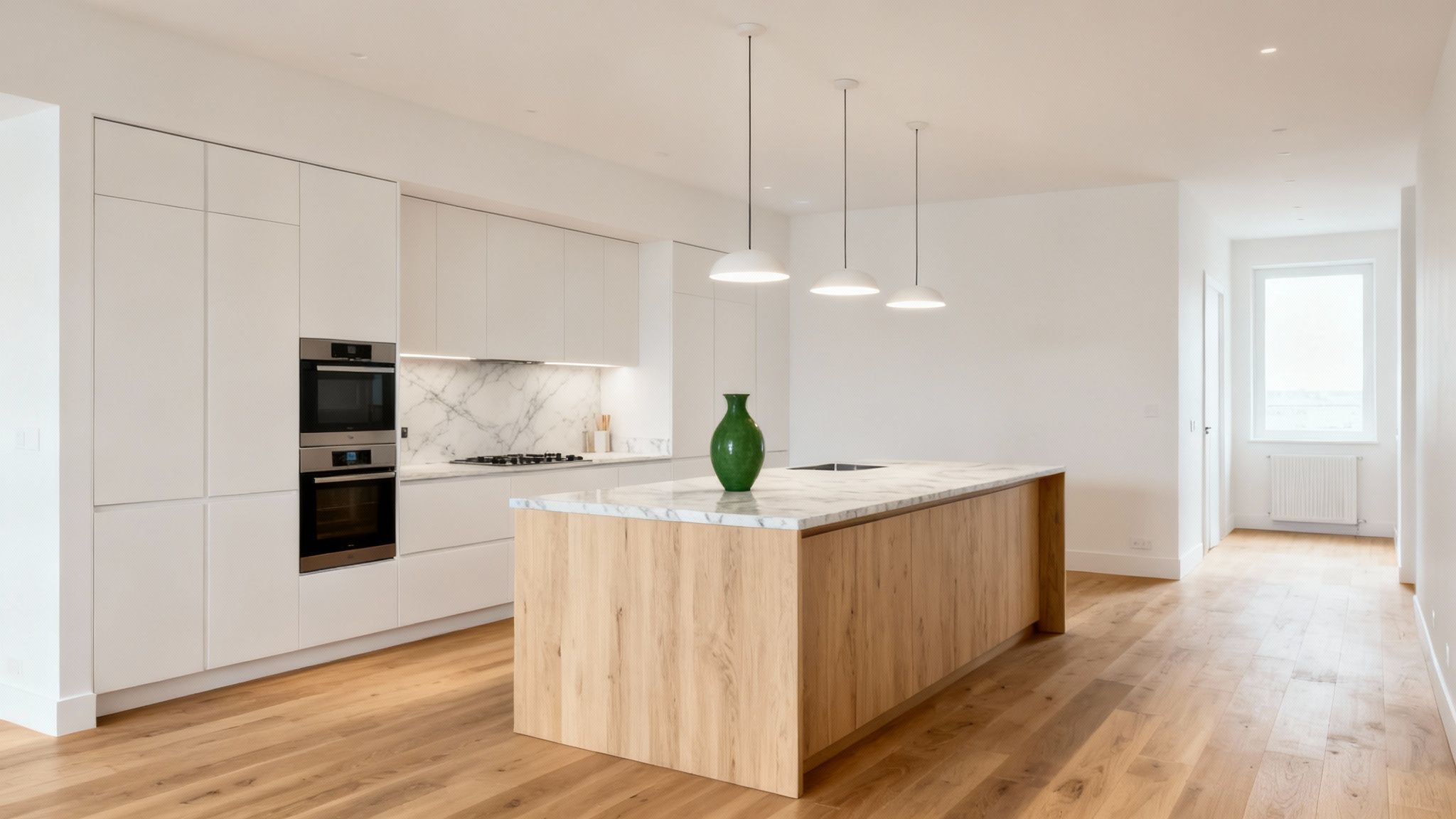
Once you have a solid plan for the property's structure and systems, the next crucial item on your house flipping checklist is the design and aesthetic modernization. This stage is where you transform a dated or neglected property into a highly desirable home that resonates with today’s buyers. It involves strategic updates to kitchens, bathrooms, flooring, paint, and curb appeal to maximize its market value and emotional impact.
Blending Trends with Timeless Appeal
Effective design is not just about following trends; it’s about making smart choices that yield the highest return on investment. The goal is to create a clean, modern, and inviting space that allows potential buyers to envision themselves living there. For example, creating an open-concept kitchen by removing a non-load-bearing wall can dramatically increase the perceived value and square footage of a home, a strategy popularized by design shows like Property Brothers.
Executing Your Design Plan
A successful aesthetic overhaul focuses on high-impact areas and uses a budget-conscious approach to achieve a high-end look. Your design choices should be guided by your target demographic and the standards of the neighborhood, not your personal taste.
- Focus on Kitchens and Bathrooms: These rooms offer the highest ROI. A modern kitchen with white or gray shaker cabinets, quartz countertops, and stainless steel appliances has become a market standard that buyers expect.
- Choose Neutral Paint Colors: Stick to a neutral palette of whites, light grays, or warm beiges. These colors make spaces feel larger, brighter, and provide a blank canvas for buyers.
- Upgrade Flooring: Install durable, modern flooring like Luxury Vinyl Plank (LVP) in high-traffic areas. Consistent flooring throughout the main living spaces creates a seamless, cohesive look.
- Enhance Curb Appeal: The first impression is critical. A freshly painted front door, new house numbers, updated exterior lighting, and simple, clean landscaping can significantly boost a home's attractiveness.
- Match Finishes to the Market: Avoid over-improving. Installing high-end, luxury finishes in a mid-range neighborhood will not generate a proportional return. Keep your upgrades in line with the home’s After Repair Value.
Key Insight: The most profitable design choices appeal to the broadest possible audience. Avoid highly personal or polarizing selections. Your role is to create a beautiful, move-in-ready product that sells quickly, and that means prioritizing market-proven styles over niche trends.
8. Project Timeline and Schedule Management
Once your budget is set, managing the project timeline becomes the single most important factor in protecting your profit. Every day the project runs over schedule, carrying costs like your mortgage, insurance, and utilities eat directly into your bottom line. A disciplined approach to schedule management is a non-negotiable part of any professional house flipping checklist, transforming a chaotic renovation into a predictable and profitable process.
Understanding the "When" and "How Long"
Effective timeline management is about more than just setting a finish date; it's about sequencing tasks logically to prevent bottlenecks and downtime. For example, a seasoned flipper in a market like Denver, Colorado, knows to schedule the foundation inspection before the framing crew is scheduled to start, preventing an entire team from being on paid standby. This foresight, which accounts for dependencies between tasks, is what separates amateur rehabs from professional, high-velocity flips.
Executing Your Schedule
A robust project schedule is built by breaking the entire renovation down into phases and individual tasks, then assigning realistic durations to each. This detailed plan becomes your roadmap, keeping contractors accountable and the project moving forward efficiently.
- Build in a Buffer: Experienced investors universally recommend adding a 20-30% contingency to your timeline. If you calculate a 10-week project, schedule it for 12-13 weeks to absorb inevitable delays from permit approvals, material backorders, or unexpected discoveries.
- Sequence Your Trades: Create a logical flow of work. You cannot have the drywall team hanging sheets while the electrician is still running wires in the walls. Map out the critical path: electrical and plumbing rough-ins must pass inspection before insulation and drywall can begin.
- Use Project Management Tools: Leverage software like Trello, Asana, or a specialized construction app. These tools help visualize dependencies, track progress against milestones, and centralize communication, which has been shown to reduce timeline overruns.
- Set Clear Milestones: Tie contractor payments to the completion of specific, verifiable milestones (e.g., "rough-in inspections passed," "kitchen cabinets installed"). This incentivizes timely performance and protects you from paying for incomplete work.
Key Insight: Your timeline is a living document, not a static one. The goal isn't just to create a schedule but to actively manage it. By conducting weekly check-ins, tracking your actual progress against the plan, and communicating proactively with your team, you can identify potential delays early and take corrective action before they derail the entire project and its profitability.
9. Marketing and Sale Preparation
After weeks or months of renovation, the final push to profitability relies on strategic marketing and impeccable sale preparation. This crucial step in the house flipping checklist is about creating a compelling narrative for the property that attracts qualified buyers quickly and secures the highest possible sale price. It’s the bridge between a finished project and a realized profit, where presentation directly translates to financial return.
Understanding the "Why" and "Where"
Effective marketing is about showcasing the value you’ve added and making an emotional connection with potential buyers. It’s no longer enough to simply list a home; you must create an experience. For example, flippers in markets like Miami or San Diego, where outdoor living is paramount, use drone photography to highlight pools, ocean views, or expansive backyards. This approach has been shown to generate significantly more online interest, drawing in buyers who value those specific lifestyle features and are willing to pay a premium for them.
Executing Your Analysis
A successful sale strategy involves a multi-pronged approach that combines professional visuals, strategic staging, and widespread online exposure. This process ensures your property stands out from the competition and minimizes its time on the market.
- Invest in Professional Visuals: High-quality photos are non-negotiable. Hire a professional real estate photographer, a minimum investment of $500-$1,000 that can yield thousands in return. For properties with unique lots or views, add aerial drone photography to your package.
- Stage for a Broad Audience: Professional home staging, which typically costs $1,500-$3,000, helps buyers visualize themselves in the space. Use neutral furniture and minimal personalization to appeal to the widest possible demographic.
- Craft a Compelling Listing: Write a detailed and engaging property description that highlights all recent upgrades, such as a new roof, updated HVAC system, or high-end kitchen appliances. Mention specific brand names and warranties where applicable.
- Leverage Technology and Experts: Create a high-quality virtual tour to attract remote buyers. More importantly, partner with an experienced real estate agent who has a proven track record in the specific neighborhood and can ensure your listing gets maximum exposure on the MLS, Zillow, Redfin, and other major platforms.
Key Insight: Your marketing efforts should begin before the final nail is hammered. Engage your real estate agent early and schedule your photographer and stager in advance. Creating a marketing timeline that runs parallel to the final stages of your renovation ensures the property can be listed the moment it's ready, capitalizing on market momentum and reducing costly holding days.
10. Exit Strategy and Profit Analysis
A successful house flip is defined at the finish line, not the starting block. This makes a predefined exit strategy and a meticulous profit analysis essential components of any comprehensive house flipping checklist. This step forces you to decide how you will profit from the property before you even own it, aligning every decision with your ultimate financial goal.
Understanding the "Why" and "When"
Your exit strategy dictates the entire project's timeline, budget, and scope. For example, a flipper in a hot market like Nashville might plan for a traditional retail sale, knowing high buyer demand will support a quick, profitable exit within 6-9 months. Conversely, an investor facing a cooling market might pivot to a BRRRR (Buy, Rehab, Rent, Refinance, Repeat) strategy, creating long-term cash flow instead of relying on a quick sale. The strategy you choose is your project's roadmap.
Executing Your Analysis
A robust profit analysis goes beyond a simple "ARV minus costs" calculation. It involves stress-testing your numbers and understanding all potential outcomes to ensure the deal remains profitable even if things don't go perfectly as planned.
- Define Your Exit: Clearly choose your primary strategy. Will it be a retail flip, a wholesale assignment for a quick fee, or a creative lease-option? Each path has different costs, timelines, and tax implications.
- Calculate Key Metrics: Determine your projected Return on Investment (ROI) and cash-on-cash return. A minimum ROI of 15-20% is a common benchmark for traditional flips, but this varies by market and risk tolerance.
- Account for All Costs: Itemize every expense: purchase price, closing costs, renovation materials and labor, permits, financing interest, insurance, utilities, staging, and realtor commissions.
- Analyze Tax Impact: A critical component of profit analysis involves understanding the intricacies of taxes on flipping houses, as capital gains can significantly affect your net profit.
- Create a Backup Plan: What happens if the market shifts and your property doesn't sell? A solid backup plan, such as renting the property, can protect you from a forced, low-profit sale. For a deeper dive into the numbers, explore this real estate investment analysis spreadsheet.
Key Insight: Your profit is made when you buy, but it's realized when you sell. By defining your exit strategy and rigorously analyzing profitability from day one, you build a financial buffer and a clear plan of action. This foresight transforms a speculative venture into a calculated investment, protecting your capital and maximizing your returns.
10-Point House Flipping Checklist Comparison
| Item | Implementation Complexity (🔄) | Resource Requirements (⚡) | Expected Outcomes (⭐ 📊) | Ideal Use Cases (💡) | Key Advantages (⭐) |
|---|---|---|---|---|---|
| Property Analysis and Market Research | 🔄 Medium — systematic data collection and interpretation | ⚡ Low–Moderate: MLS/tools, time, market expertise | ⭐⭐⭐⭐ 📊 Clear buy/no‑buy signals; realistic profit ranges | 💡 Pre-purchase screening; market selection; pricing | ⭐ Data-driven decisions; reduces investment mistakes |
| Property Inspection and Due Diligence | 🔄 Medium — specialized inspections and reports | ⚡ Moderate: professional inspectors, testing fees, time | ⭐⭐⭐⭐⭐ 📊 Identifies hidden costs; refines renovation budget | 💡 Before closing; high‑risk or older properties | ⭐ Reveals costly defects; negotiation leverage |
| Financing and Securing Capital | 🔄 Medium–High — lender underwriting and agreements | ⚡ High: capital, credit, legal documentation, reserves | ⭐⭐⭐ ⭐📊 Enables purchases; affects ROI via cost of capital | 💡 Fast turnarounds or large projects needing leverage | ⭐ Provides buying power and flexibility |
| Accurate Renovation Budget and Cost Estimation | 🔄 High — detailed line‑item forecasting required | ⚡ High: contractor bids, estimating software, contingency | ⭐⭐⭐⭐ 📊 Controls overruns; accurate ROI projection | 💡 All rehab projects; lender underwriting and bids | ⭐ Prevents budget overruns; improves financing accuracy |
| Contractor Selection and Team Building | 🔄 High — vetting, contracts, and coordination | ⚡ Moderate–High: time, references, contract/legal costs | ⭐⭐⭐⭐ 📊 Better quality, faster completion, fewer change orders | 💡 Projects with extensive trades; repeat flipping | ⭐ Improves build quality and timeline reliability |
| Permits, Codes, and Legal Compliance | 🔄 Medium — jurisdictional procedures and filings | ⚡ Moderate: permit fees, inspection scheduling, compliance time | ⭐⭐⭐⭐ 📊 Ensures legal saleability and insurability | 💡 Structural/major mechanical work; historic or coastal areas | ⭐ Protects liability; avoids fines and shutdowns |
| Design and Aesthetic Modernization | 🔄 Medium — design choices tied to market tastes | ⚡ Moderate: materials, staging, designer fees | ⭐⭐⭐⭐ 📊 Higher buyer appeal and listing performance | 💡 Kitchens/baths, curb appeal, markets with style‑driven buyers | ⭐ Increases perceived value and sale speed |
| Project Timeline and Schedule Management | 🔄 High — critical path planning and coordination | ⚡ Moderate: PM tools, buffers, active management time | ⭐⭐⭐⭐ 📊 Reduces carrying costs; limits timeline overruns | 💡 Multi‑trade projects; tight financing timelines | ⭐ Controls costs and improves on‑time delivery |
| Marketing and Sale Preparation | 🔄 Medium — professional presentation and listing work | ⚡ Moderate: photography, staging, agent fees, ads | ⭐⭐⭐⭐ 📊 Faster sell time and often higher sale price | 💡 Final sale stage; competitive or hot markets | ⭐ Attracts buyers; increases offers and sale price |
| Exit Strategy and Profit Analysis | 🔄 Medium — strategic financial modeling and choices | ⚡ Low–Moderate: analysis tools, tax/advisor time | ⭐⭐⭐⭐ 📊 Determines best sale path and expected ROI | 💡 Before purchase; when market or goals vary | ⭐ Provides clarity on profitability and fallback plans |
From Checklist to Closing: Your Path to Flipping Success
Navigating the world of house flipping can feel like assembling a complex puzzle with a thousand moving pieces. This comprehensive house flipping checklist has been designed to provide you with the picture on the box, a clear, step-by-step guide to transform a neglected property into a profitable asset. We've moved beyond surface-level advice, diving deep into the critical stages that separate amateur attempts from professional successes. From the initial market analysis and rigorous due diligence to the complexities of financing, permitting, and contractor management, each step is a crucial link in the chain.
The journey doesn't end with a completed renovation. As we've detailed, the final phases involving strategic staging, aggressive marketing, and a seamless closing process are where your hard work translates into tangible profit. Mastering these elements is not just about following a list; it's about developing a repeatable, systematic business process. The most successful investors don't leave outcomes to chance. They build systems, leverage data, and meticulously track every dollar and every day spent on a project.
Key Pillars of a Profitable Flip
Think of this checklist not as a rigid set of rules, but as a framework for sound decision-making. The core principles that will consistently drive your success can be distilled into three key areas:
Data-Driven Diligence: Your most critical decisions happen before you ever own the property. This includes everything from accurate After Repair Value (ARV) calculations and market trend analysis to comprehensive inspections that uncover hidden costs. Never fall in love with a deal; let the numbers dictate your actions. A robust financial model is your best defense against emotional investing.
Systematic Project Management: Once the property is yours, execution is everything. Your ability to create a realistic renovation budget, hire and manage a reliable team of contractors, and adhere to a strict project timeline will directly impact your profit margins. Delays and budget overruns are the primary enemies of a successful flip. Implementing project management tools and maintaining constant communication are non-negotiable.
Strategic Exit Execution: A beautifully renovated house is worthless until it sells. The final 10% of the process, which includes professional staging, high-quality marketing, and navigating the sales process, determines how quickly you can realize your return on investment. Having a clear exit strategy from day one ensures you are always working toward a specific, profitable goal.
Investor Insight: "The best house flippers are not just renovators; they are expert project managers and meticulous financial analysts. The checklist is their blueprint, but their discipline in executing that blueprint is what builds their wealth."
Ultimately, this house flipping checklist is more than a simple guide; it's a professional playbook. By internalizing these stages and committing to a disciplined, business-minded approach, you transform real estate from a speculative gamble into a predictable wealth-building engine. Each successful project sharpens your skills, strengthens your network, and builds the momentum needed to scale your operations. You now have the knowledge and the structure required to confidently find, fund, fix, and flip your next property with precision.
Ready to stop guessing and start analyzing deals with data-driven confidence? Our Property Scout 360 tool automates the most tedious parts of your due diligence, instantly calculating ROI, break-even points, and cash flow projections based on real-time market data. Turn this house flipping checklist into an actionable, profitable system by trying Property Scout 360 today and make your next investment your best one.
About the Author
Related Articles
2026 Investor's Guide: Cost of Installing a Sewer Clean Out
Understand the cost of installing a sewer clean out for investment properties in 2026. Get expert advice on prices, ROI, & budgeting for flips. Plan smart!
15 Year vs 30 Year Mortgage: The Investor's Choice
Deciding between a 15 year vs 30 year mortgage for a rental property? Our guide analyzes cash flow, ROI, and equity to help you pick the best loan.
Real Estate Appraisal Software: Features & Limits
Discover what real estate appraisal software is, its core features, and limits. See how it differs from investment tools for profitable deals.
